204 Church St
Santa Cruz, CA
USA
Making low intervention fine wines from cool climes and 19th & early 20th C vines (+ a few Late Disco-era) in Santa Cruz since 2008.
Your Custom Text Here

Your Custom Text Here
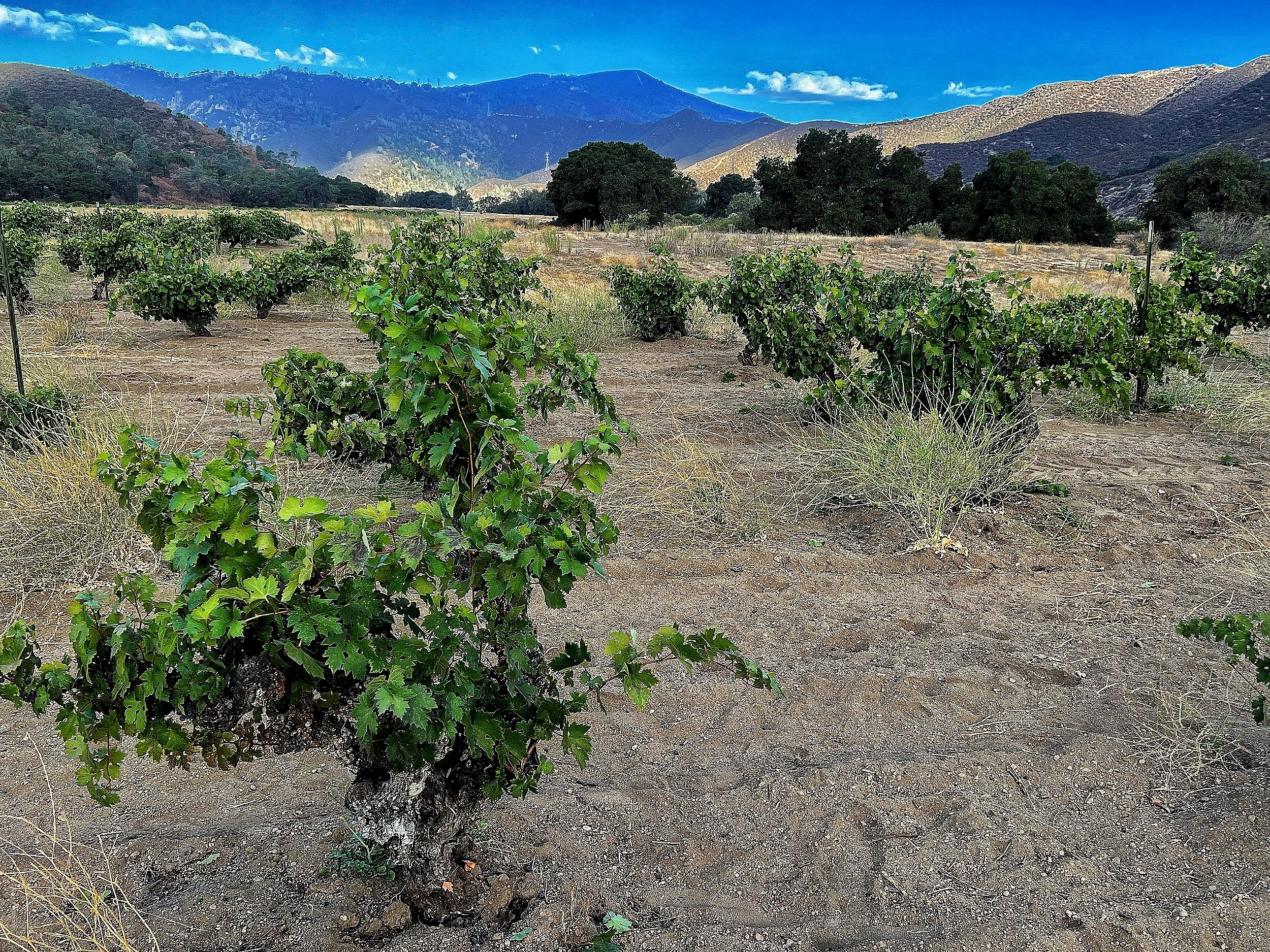
We love the crisp, aromatic, tangy rosés of Provence [and the lifestyle that affords one the chance to drink them in their native habitat]. So, given the opportunity to work with this head-pruned, non-irrigated, organically farmed cinsault vineyard planted in 1886, as Gustav Eiffel was still putting together his controversial tower in Paris, we started putting together a not so controversial plan for our Provençal inspired Vin Gris. Grapes from one section of the vineyard typically end up in rich, raspberry coulis scented red wines. We take our grapes from a small section which yields more floral, botanical notes of violet, lavender and spice, ideal for crisp, dry rosé. Farmed lovingly by Kevin Phillips, this 136+ year-old cinsault shines in our Vin Gris complemented by George Besson's Grenache and centenarian mourvèdre from ungrafted vines in the sands of the Sacramento River Delta. Since 2012, we have also begun making a small quantity of red cinsault from this venerable vineyard; the viticultural equivalent of having our cake and eating it, too.
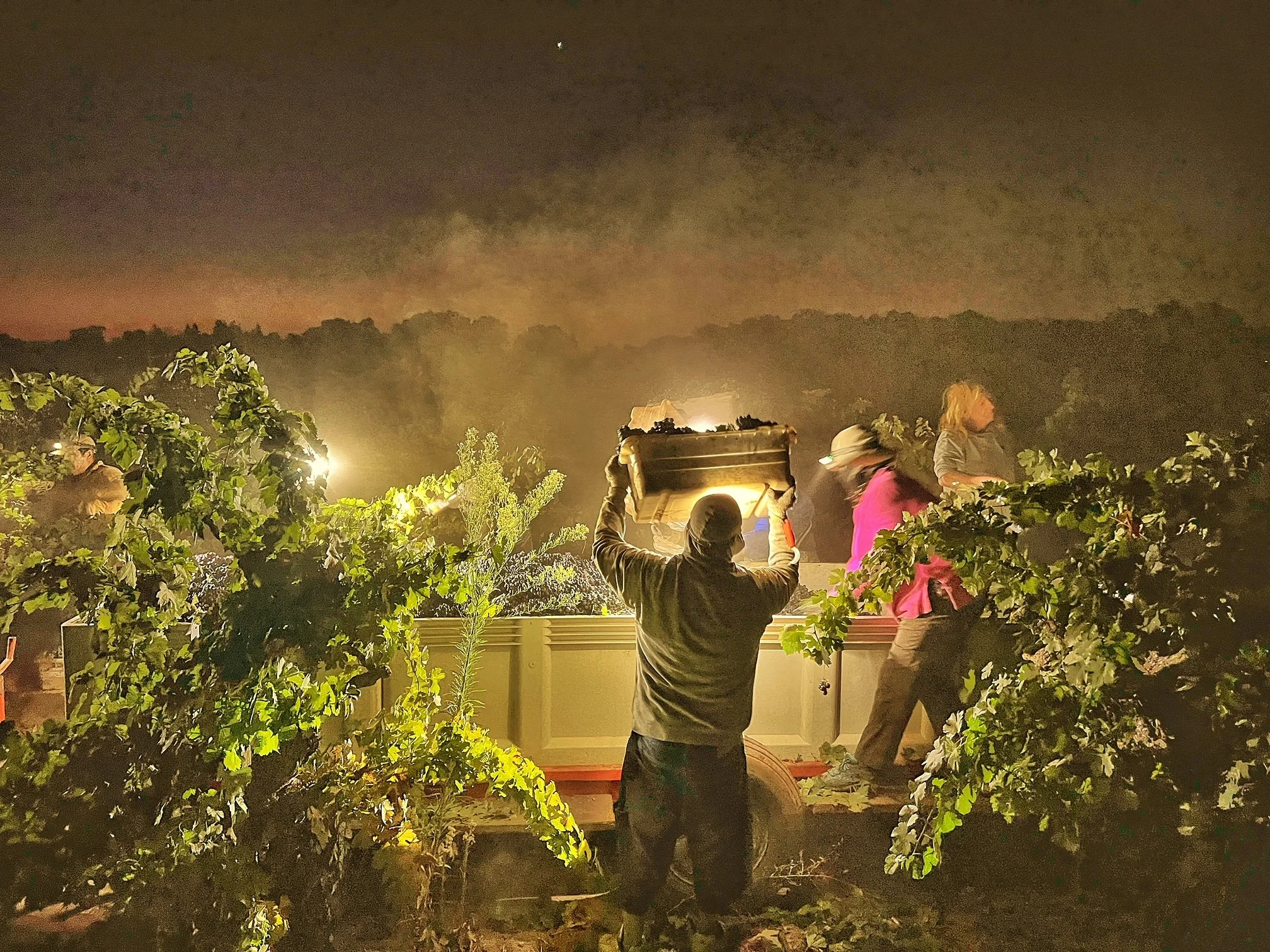
Night-time harvest at Bechthold vineyard of Cinsault grapes with a picker hoisting full bin of grapes overhead, his silhoutte backlit by the LED headlamps of his crew.
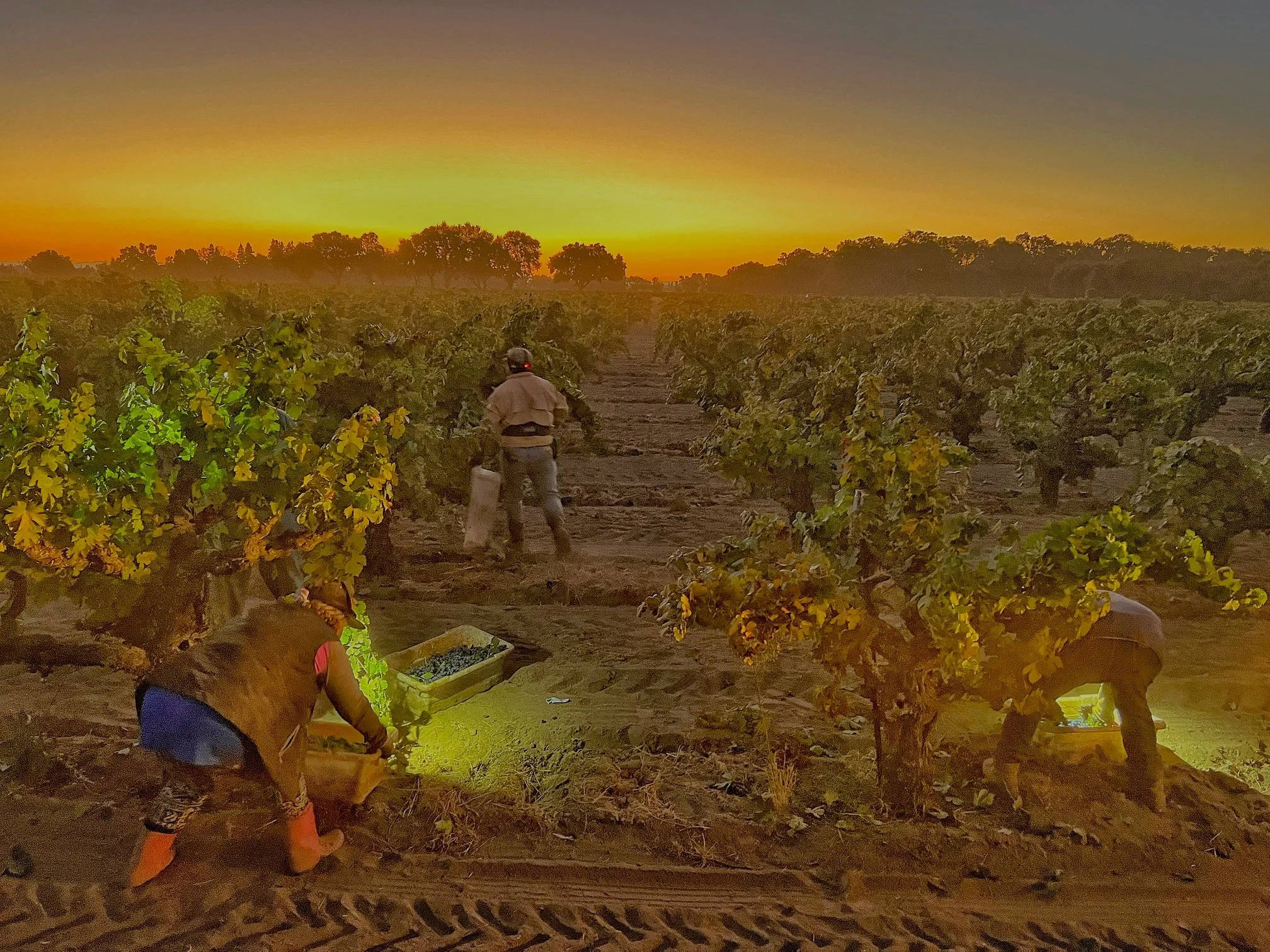
2 pickers in the foreground bent over yellow picking bins illuminated by their own headlamps underneath Cinsault grapevines as they harvest the last grapes, with sunrise coming peeking over the horizon.
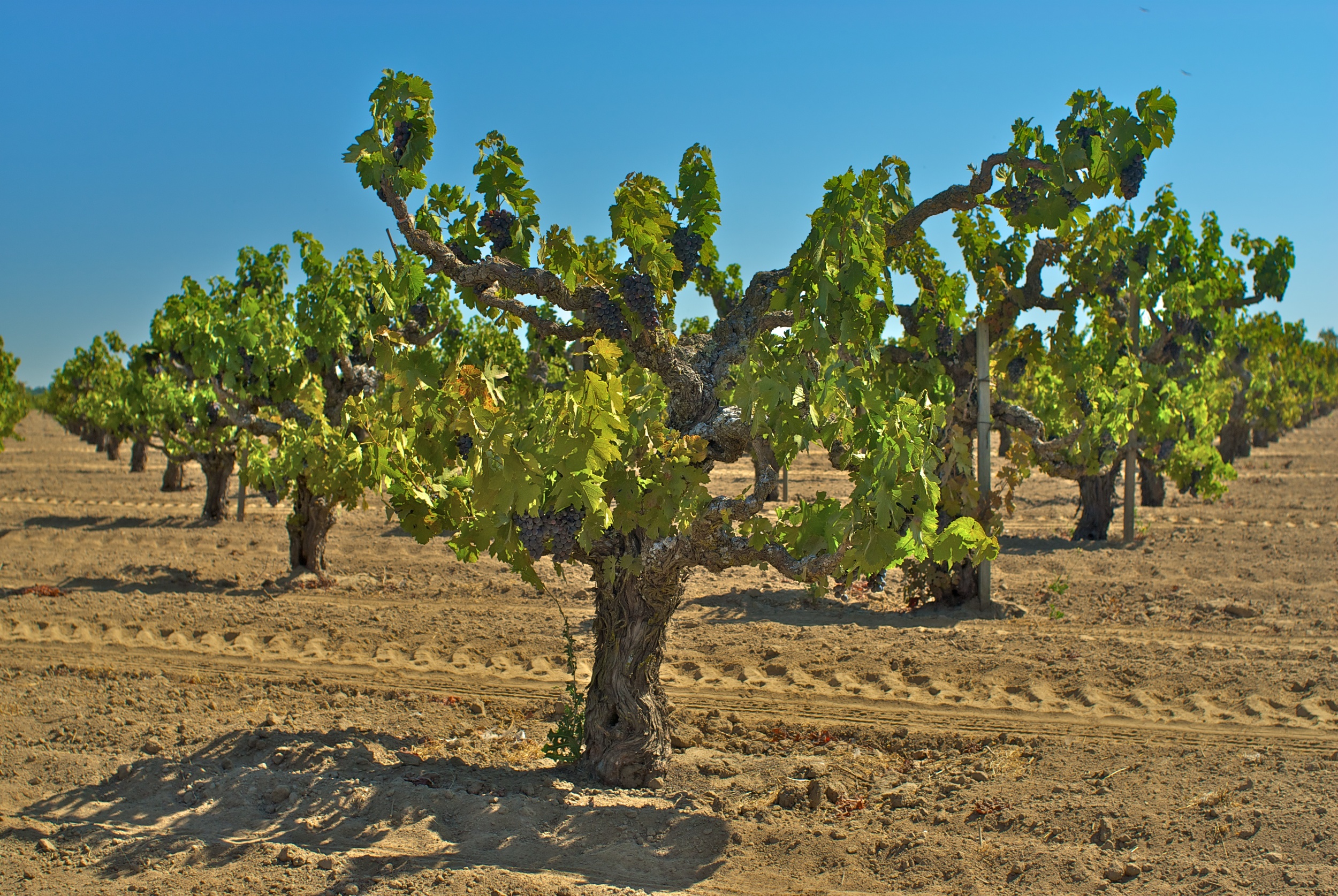
A tree-like Cinsault grapevine casting a shadow on sandy soil reaches for the bright blue sky at the world’s oldest Cinsault vineayrd, Becthold, planted in 1886.
We are tremendously fortunate - on many levels - to have known and worked with George Besson Jr. and his exceptional vineyards for twenty years. George's late father, George Sr. purchased the grenache vineyard and farmhouse just after WWII on a gently north-facing rocky slope. These non-irrigated vines, planted in 1910, sit a short distance from the start of the Santa Cruz Mountains, but several dozen feet too low to qualify for the appellation. Walking through the vines with George, one senses his deep affection and respect for the land and the vines, and his belief in man's subordinate role to nature in determining the ultimate quality of the grapes grown there. As a consequence of the age of the vines, the lack of irrigation, and the conservative farming practices, the quantity of grapes grown there is quite small - rarely if ever over 2 tons/acre.
A mile and a half to the west, and that much closer to the Monterey Bay coastline that lies on the other side of the Hecker Pass Gap, is the Besson's Home Ranch property. Purchased from Italian bootleggers by George's grandfather in 1925, there nonagenarian Zinfandel planted in 1922 coexists in unlikely juxtaposition with Pinot up against the eastern face of the Santa Cruz Mountains, again a little too low--and literally on the wrong side of the road-- to qualify for the appellation. Tended for 3 generations, the Home Ranch's granitic and sandy loam soils produce Spinal Tap Stonehenge-sized pinot berries on very small clusters.
On the other side of George's house, the old vine zinfandel benefits from morning and afternoon sun and the unusually fresh marine-moderated night that permits full expression and flavor development without requiring raisination and ruination by fire-breathing degrees of alcohol.
We are honored to continue the long legacy of a commitment to the wine and spirits business at the Besson sites.
A Gnarled, thick trunked one hundred fifteen year old grapevine laden with fruit at harvest.
Parallel rows of century-old head-pruned Grenache vines at Besson receding into the distance under a bright blue sky with high clouds.
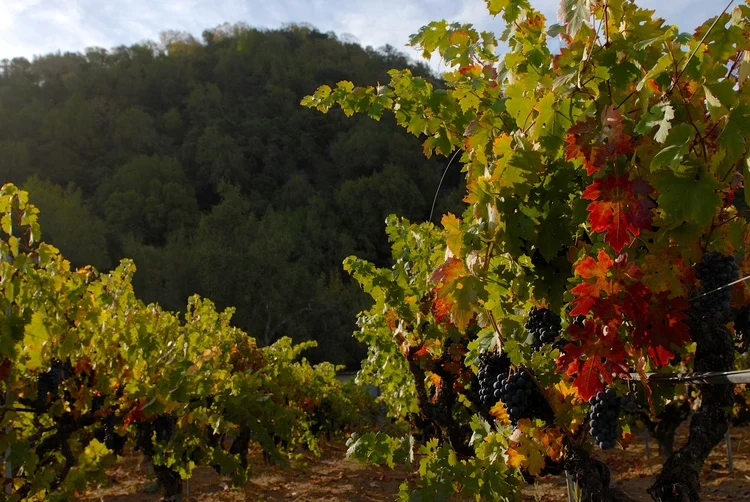
Backlit bright red grapevine leaf of Zinfandel from the 1922 planting at Besson with the mountains in the distance.
Sunrise on the distant Santa Cruz Mountains with head-pruned one hundred fifteen year old Besson Grenache vines n the foreground.
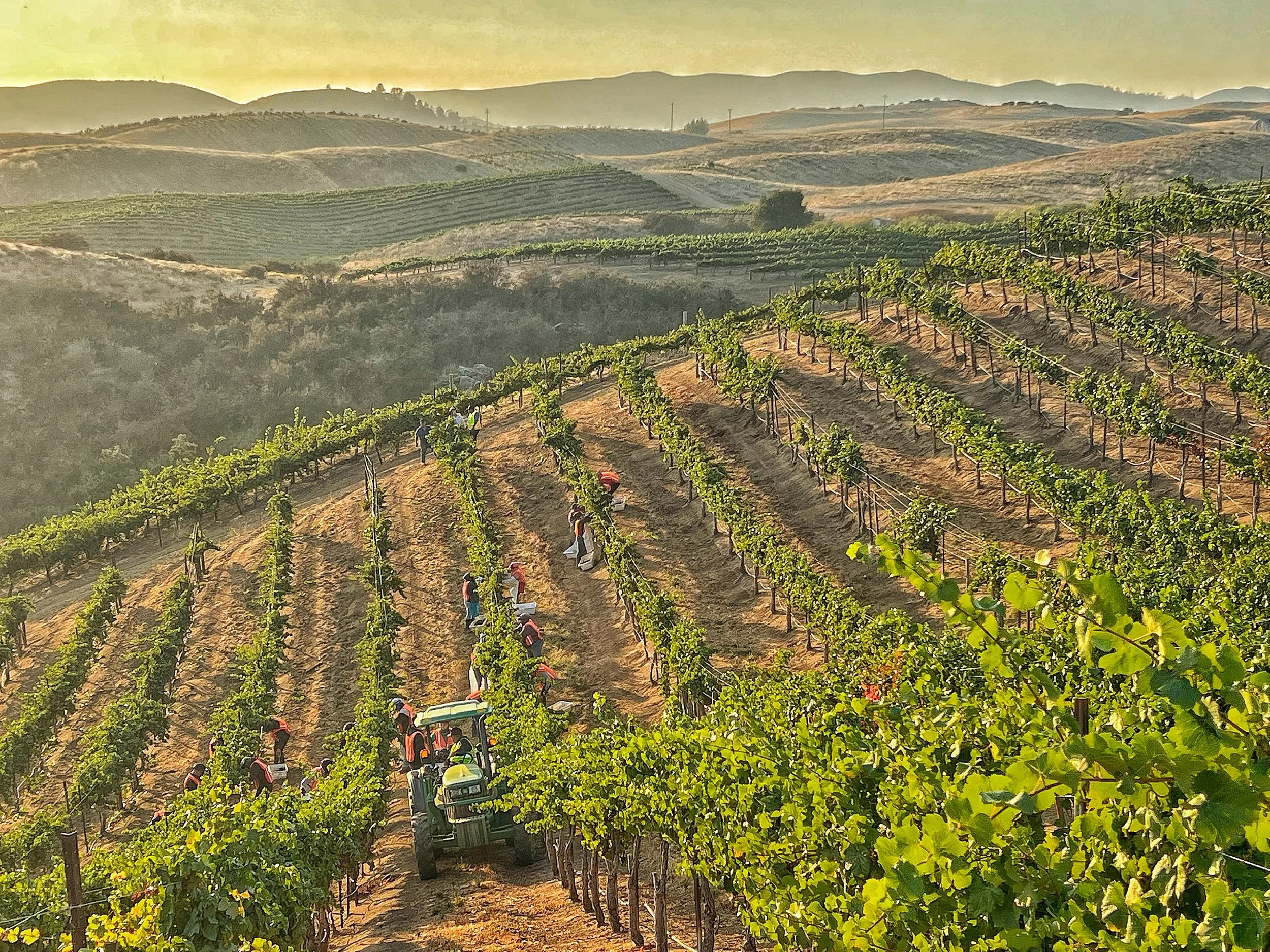
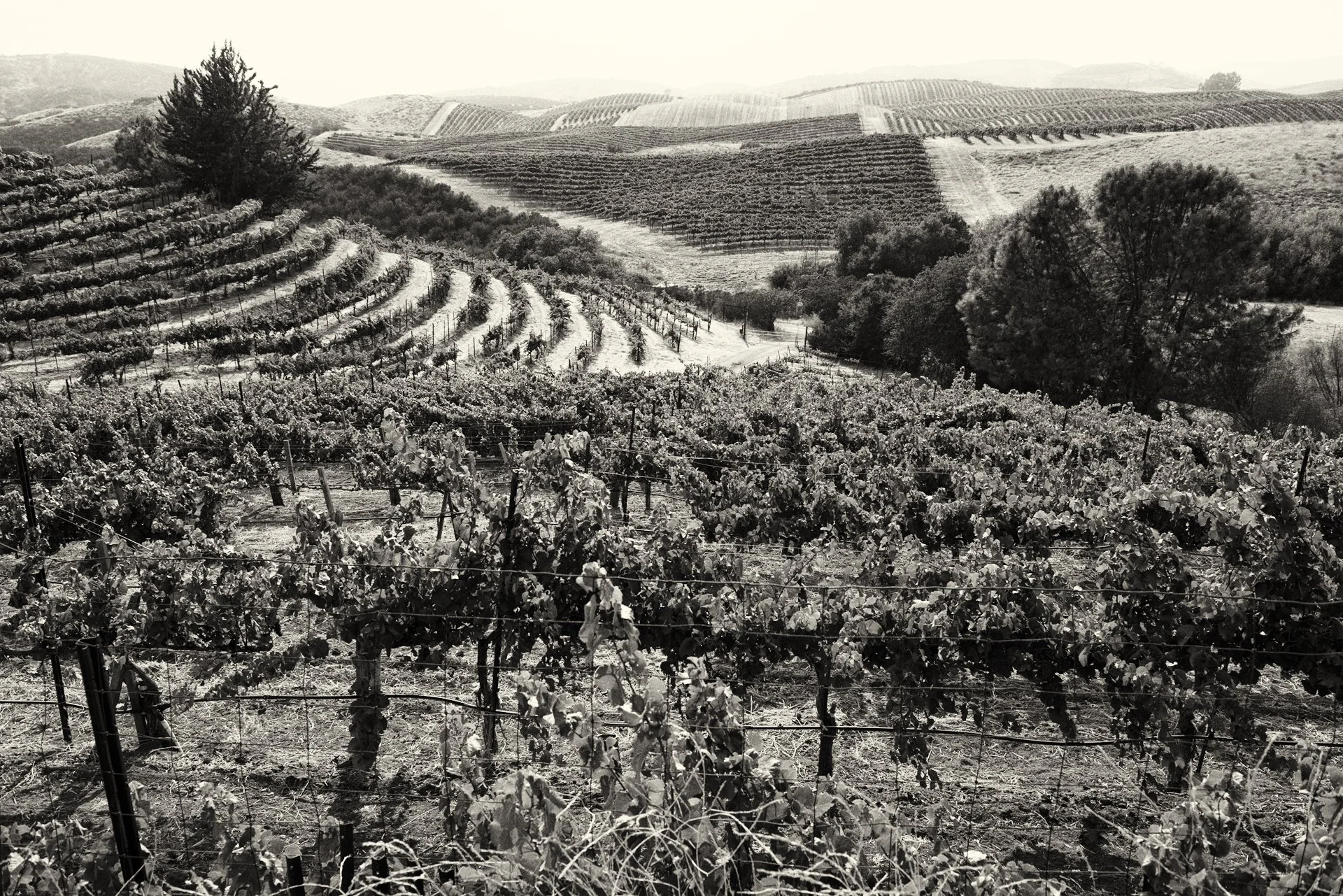
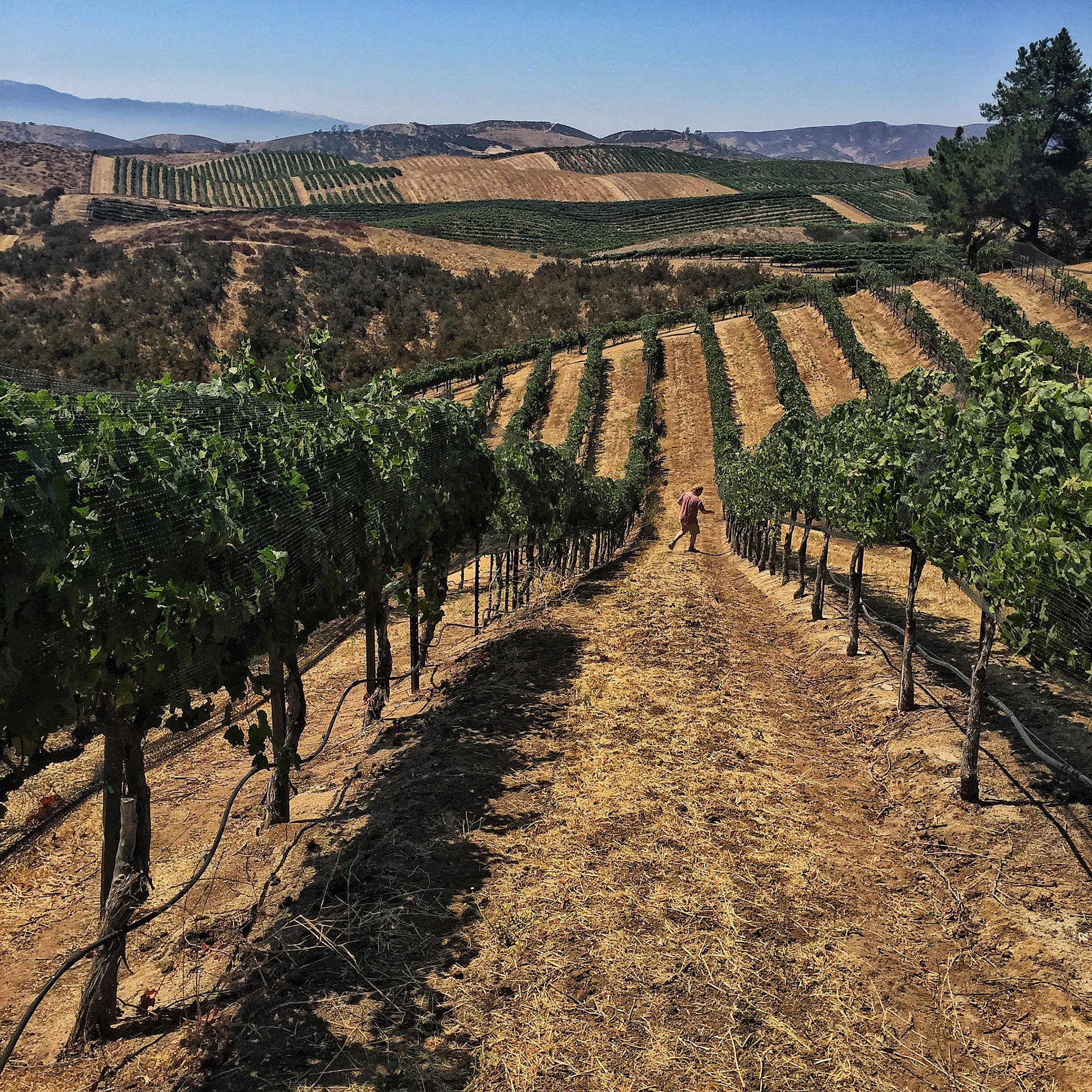
Volcanism and tectonic activity define Chalone and Pinnacles National Park, immediately below which lies the exceptionally situated Boer Vineyard, at 1600’ elevation. Dick Graff lived onsite here as he revived Chalone’s fortunes in the 1960s, culminating in his upset victory with his 1974 Chardonnay over the French in the Judgement of Paris Tasting in 1976. The surrounding vineyard was named the A Frame Vineyard for his house, and planted by Dick and his partner Phil Woodward to Cabernet in 1969. Though the house was burglarized and burned to the ground in the 1980s, Richard Boer, a longtime colleague of Dick and Phil at Chalone, purchased the property and built his home here, and a few decades ago grafted over the vineyard on these steep slopes to several selections of Pinot Noir from Chalone. Chalk from an ancient uplifted seabed and decomposing granite here comprise a highly unusual and highly prized terroir.
Sunrise harvest scene with tractor and pickers in amongst the vine rows 1600’ up in the Chalone appellation of the Gabilan Mountains.
Black and white image of curving rows on hillsides receding into the distance of Pinot Noir at Boer in the Chalone appellation of the Gabilan Mountains.
John Locke sampling grapes in the distance, visible as a small figure down long vine rows up at Boer Vineyard in the Chalone appellation of the Gabilan Mountains.
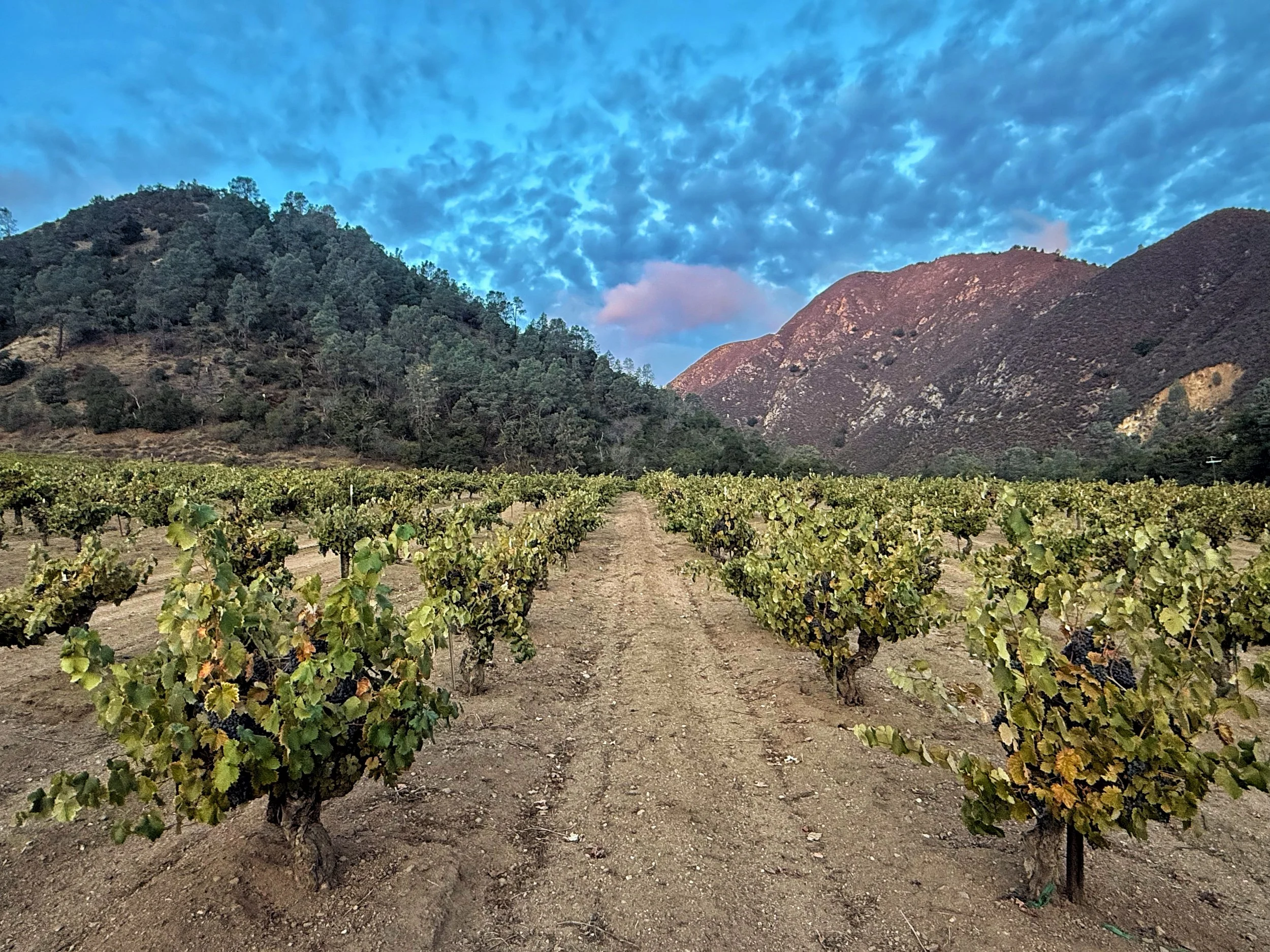
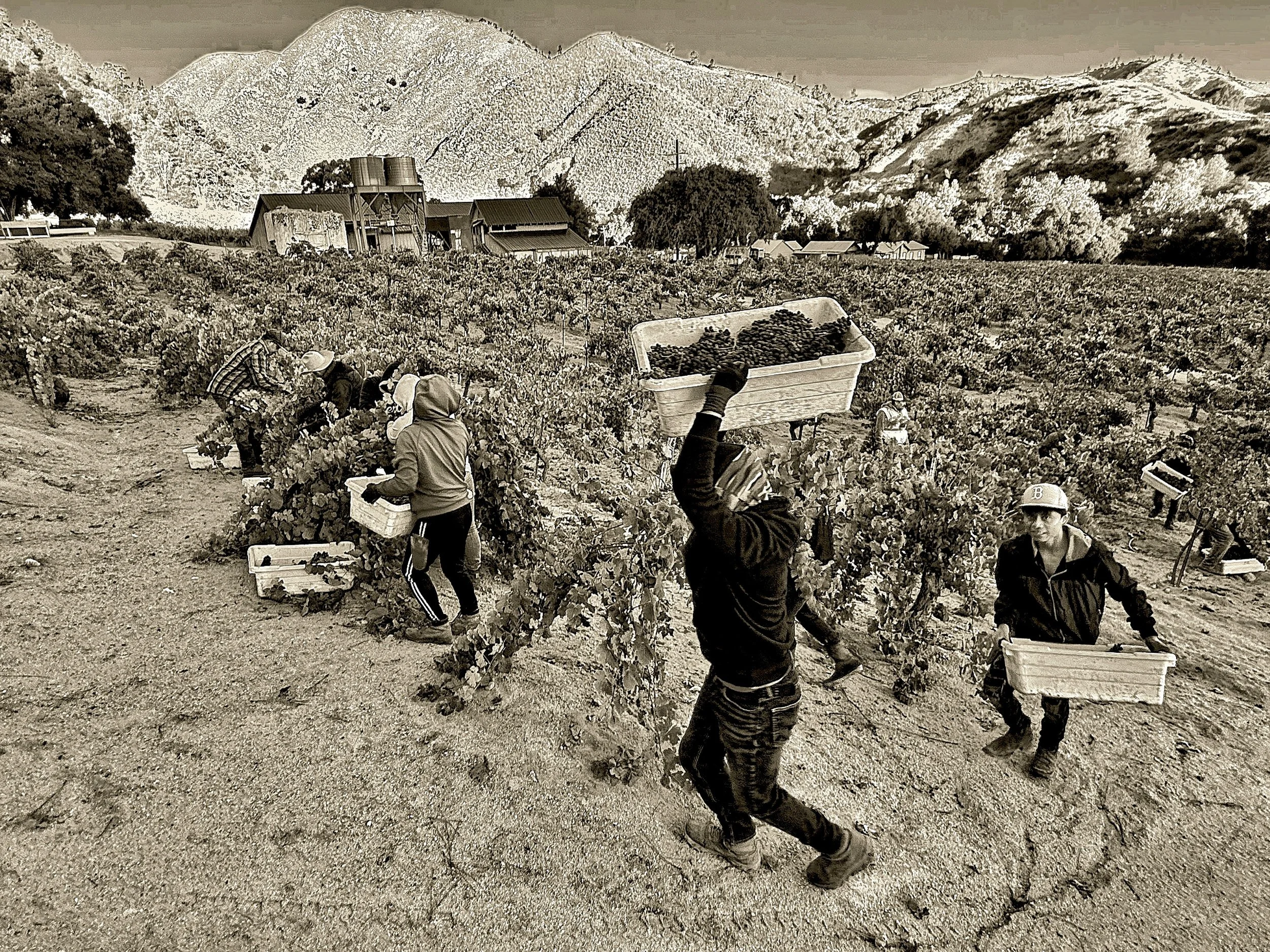
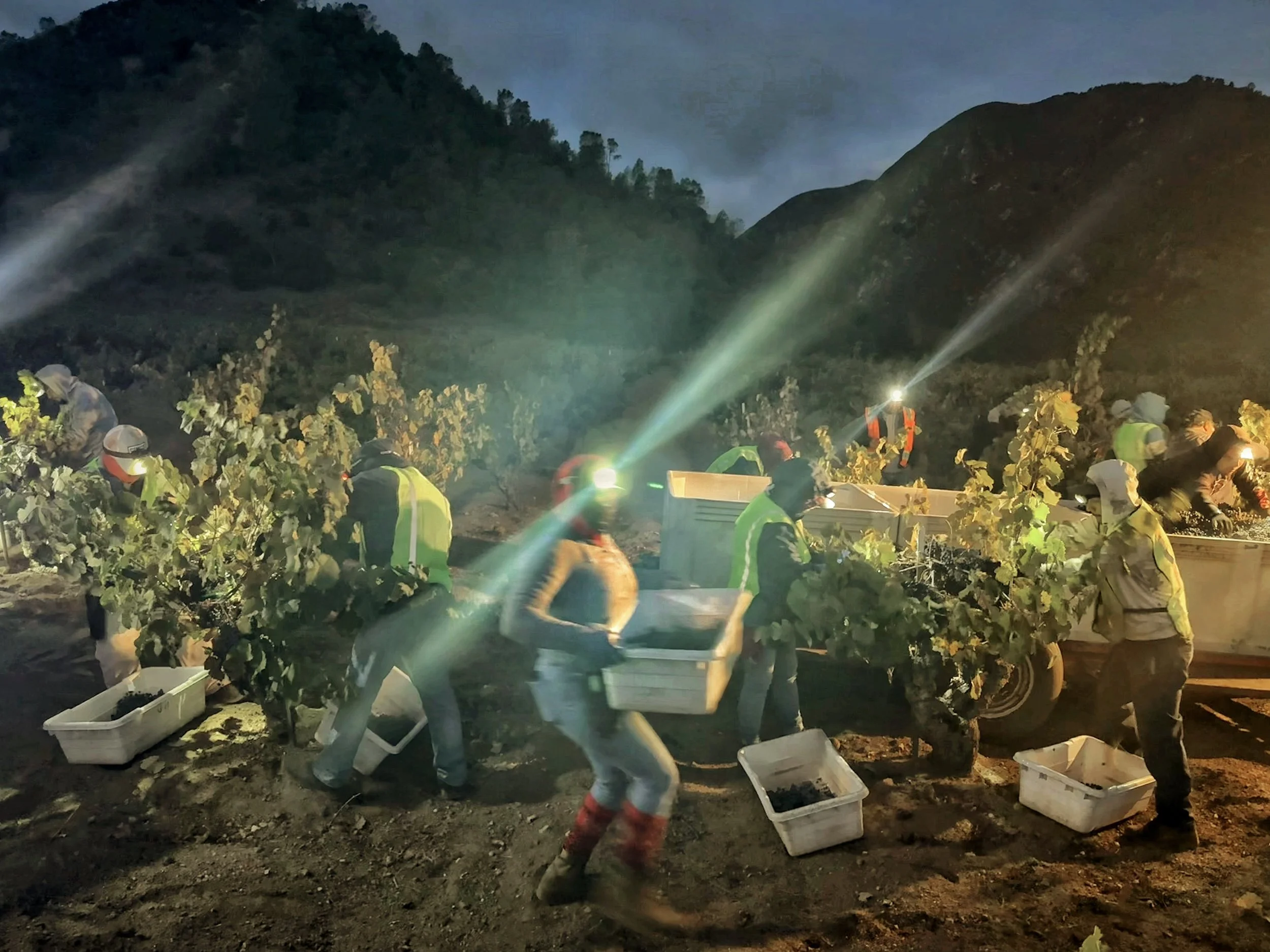
We are honored to work with the Enz family's pinot noir and old dry-farmed, head-trained mourvèdre, Cabernet Pfeffer, and Zinfandel planted more than century ago on the limestone and decomposed granite soils of the Lime Kiln Valley in the Cienega Valley, at the end of the road leading to Mt Harlan of Calera on the east side of the Gabilan range. Farmed by the Enz family since 1967, the oldest vines here date back to 1886.
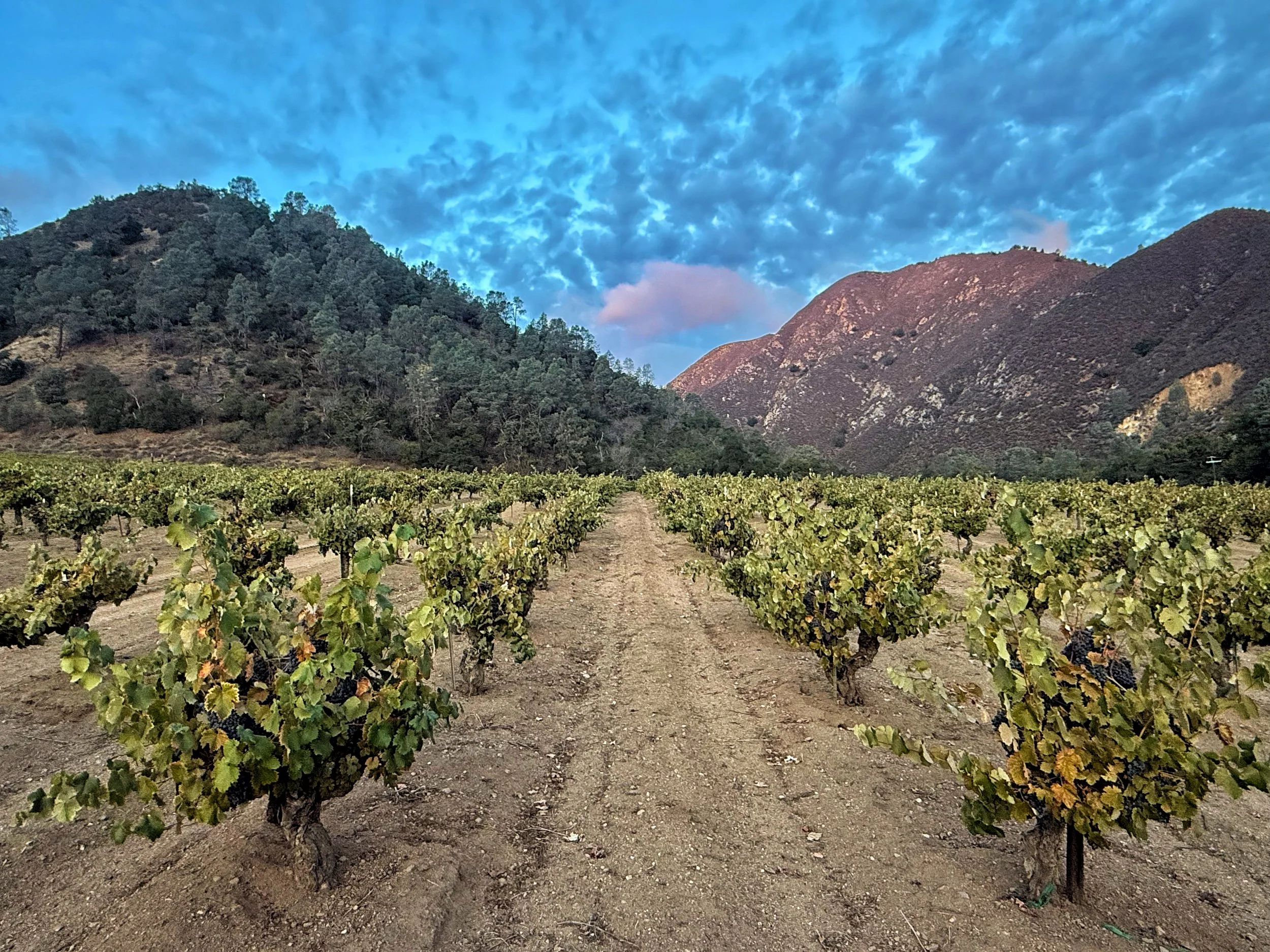
Sunrise pinks light up a single cloud floating above rows of bush vine mourvedre before the rocky backdrop of the Eastern face of the Gabilan Mountains at Enz in the Lime Kiln Valley.
Black and white image of a team of pickers hoisting full boxes of Cabernet Pfeffer grapes at harvest time from the Enz Vineyard planted in 1895, with striking white-colored mountains visible in the distance.
Nighttime horizontal composition of pickers with headlamps flaring beams of light as they pick in the middle of the night, and fill white picking boxes with Mourvèdre grapes planted in 1922 from the Enz Vineyard.
Much as the prehistoric submarine origin of its limestone and dolomite soils confer upon the Cienega Valley its ancient geological bona fides, this small, remote strip of backcountry remains home to some of the oldest continuously farmed vineyards in California, dating to the late 1840s. The Gimelli Vineyard itself hails from 1908. Planted atop porous soils of sand, the calcareous remains of uplifted seabed, and tumbled- down granite from early Miocene volcanism, these old vines, farmed organically without irrigation, yield a very small crop of such depth and intensity as to more than reward those willing to brave the frequent Hell and occasional High Water required to access this singular site. Gimelli is part of what was once known as the El Gabilan Vineyard, and neighbor to Théophile Vaché’s mid-19th Century plantings, and to the late visionary Josh Jensen’s Mt Harlan. At some 1000’ elevation, the confluence of these magic mineral calcareous soils, the cooling marine influence of nearby Monterey Bay, and 114 year-old dry-farmed vines conspire to produce something exceptional.
Sparse bush vines of Zinfandel planted in 1895 in the foreground at Gimelli Vineyard in the Cienega Valley with white-tipped mountains of a dolomite mine visible in the distance under at bright blue sky.
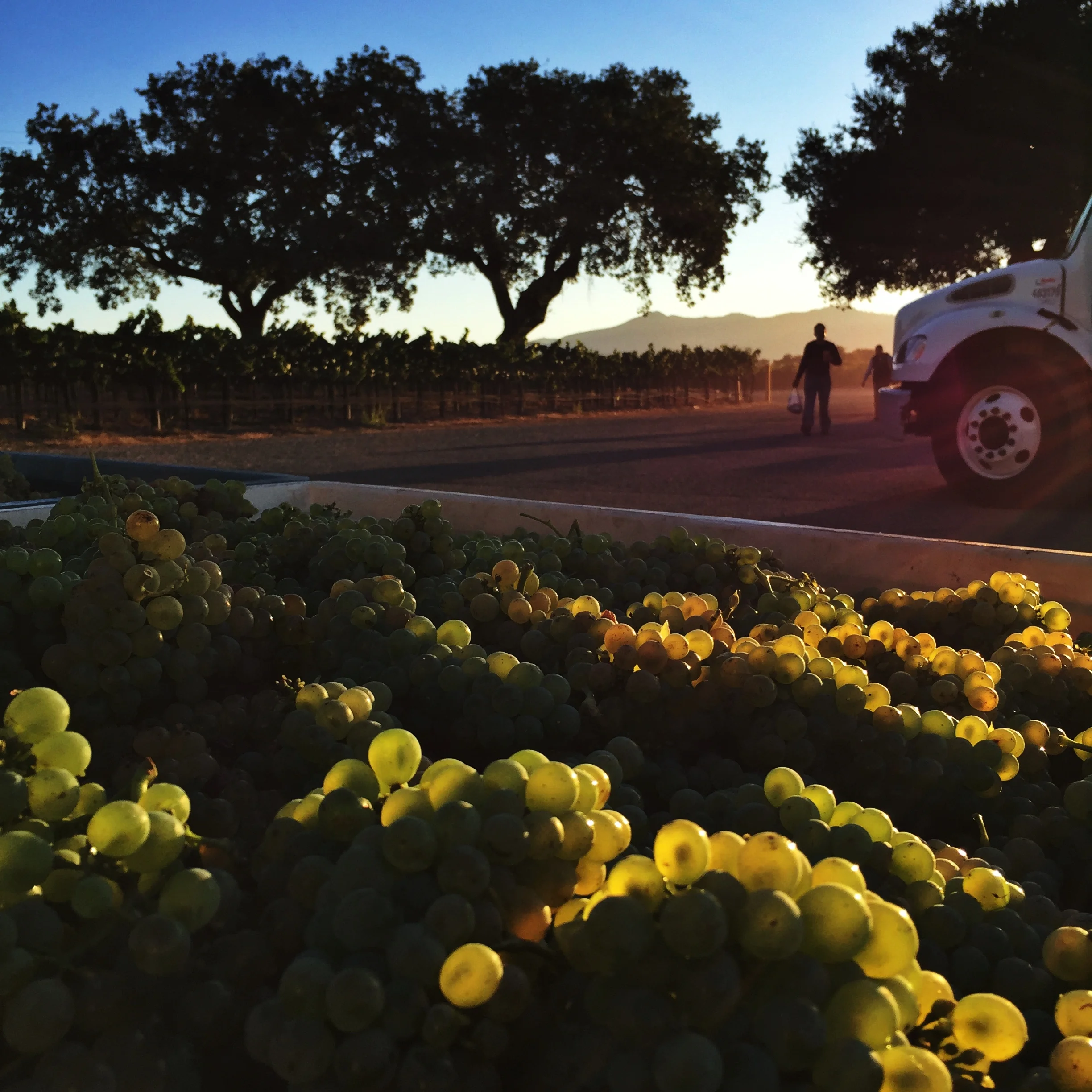
In Santa Ynez, the Jurassic Park Vineyard sits at 335m elevation on sandy, well-drained limestone-laden soils atop the playground of the dinosaurs of the Jurassic era. These days, pumpjacks swing wildly all around the perimeter of the vineyard, pumping black gold from deep underground and funding adult playgrounds in Beverly Hills. Our bounty is perhaps less remunerative, but no less precious. Planted in 1978, the age of this ungrafted Chenin vineyard qualifies it as "old" in Southern California. We treat it gently, ferment it with native yeasts, and keep it company through the winter. Each vintage shows us a new dimension, a new potential expression of this place with botrytis occasionally making an appearance. Consistently small berries and clusters and low vigor soils lend depth, dimension, and structure to this noblest of varieties. We will release a small quantity of sparkling chenin that is currently in tirage sometime in the next few years.
Early morning rays of sunlight backlight picked Chenin Blanc grapes in the foreground with pickers in the distnace next to a white truck.
On a south-facing slope perched at 300m elevation in the Santa Cruz Mountains, the Lilo Vineyard opens to an unobstructed view to the South over the Monterey Bay. Planted a dozen years ago on a complex mix of schist, shale, and sandstone soils, the slope is quite steep, and yields can be stunningly low - 0.99 ton from all 4.5 acres in 2011. Just above the fog line, this is viticulture on the edge of possibility - a site fully exposed to late frosts at bud break and spring rains that can affect flowering and every torment the weather coming off the Pacific can bring. In short, exactly the kind of marginal climate that is called for to coax the layered, subtle perfumed spicy best out of that most fickle of varieties, Pinot Noir.
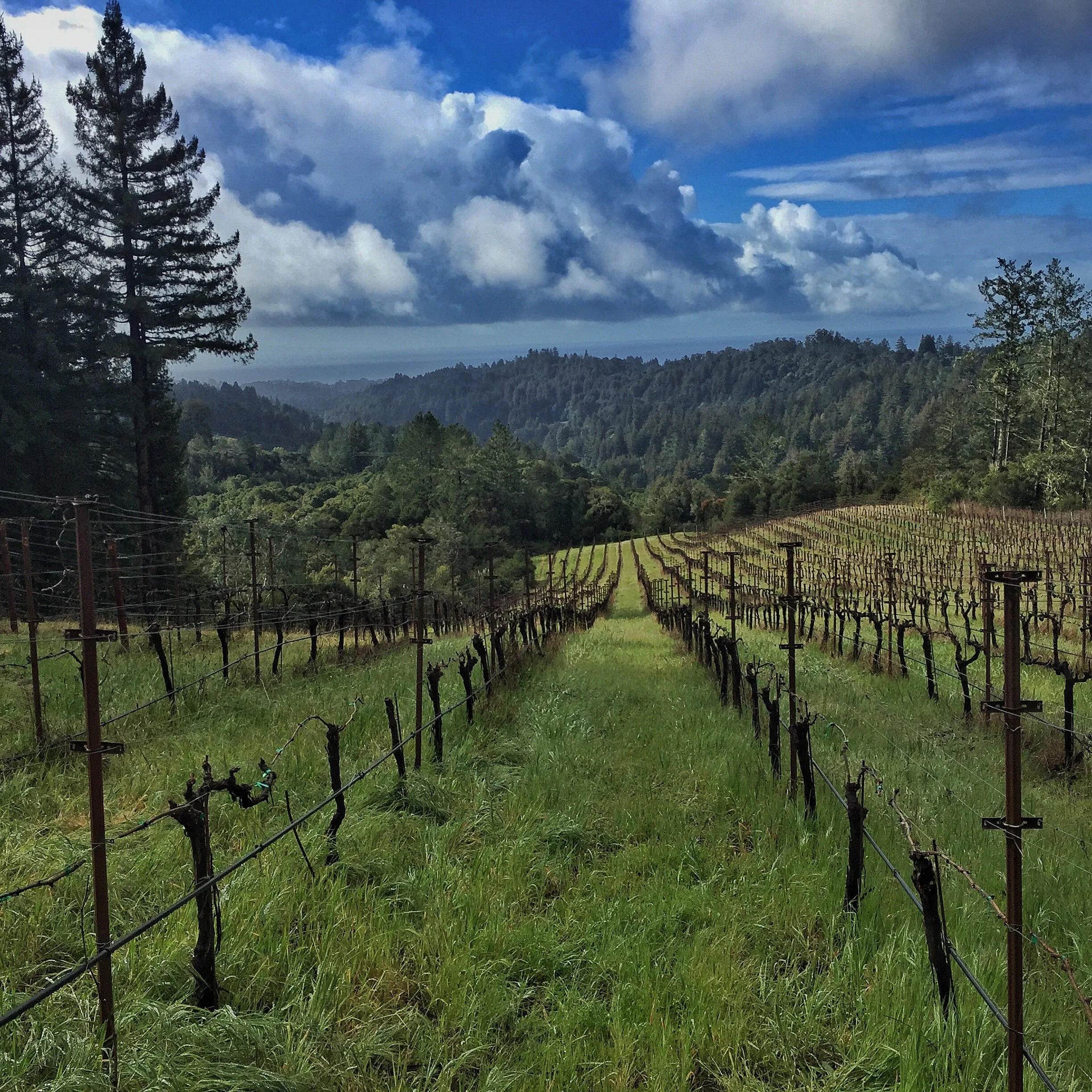
Lush green Spring photo of the Lilo Vineayrd in the Snata Cruz Mountains showing the surrounding Douglas Fir and Redwood trees and receding rows of bare vines looking out over Monterey Bay in the distance under a blue sky with large, puffy clouds.
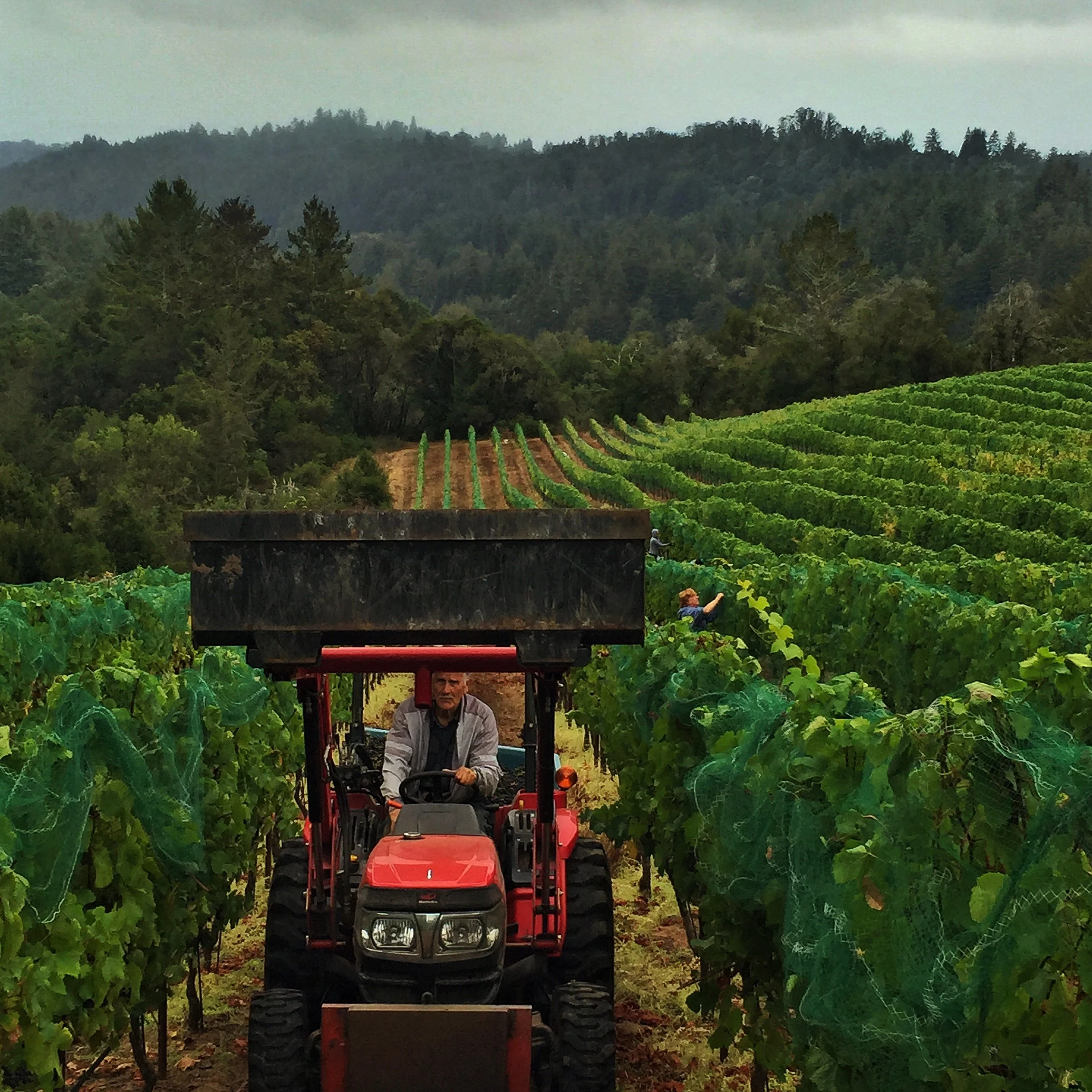
Tractor with its bucket raised high to help balance the load of grapes on the back during harvest at Lilo, with rows of leafy grapevines hemming in the tractor on each side.
Harvest sunrise image of rows of Lilo Vineyard grapevines with a prominent Douglas Fir tree on the left of image, and the waters of Monterey Bay and Lover’s Point in Monterey visible in the distance on an especially clear morning.
The Little Big Block Vineyard was planted in these deep, pure sand soils on a slope at the edge of the San Joaquin River in Contra Costa County, back in 1895 by Portuguese and Italian immigrants. As was typical of the era, they planted a variety of red grapes (“mixed blacks”) including Mourvèdre, Carignane, Zinfandel, and even Alicanté Bouschet. They are an anachronism also for the fact that they are bush vines; impossible to farm or harvest by newfangled modern mechanical means , and demand extra attention and skill in every aspect of the growing season. In the face of encroaching housing developments on every side, we hope our work with these old vines creates enough interest and value for the current generation of growers to keep on keeping on for the next generation.
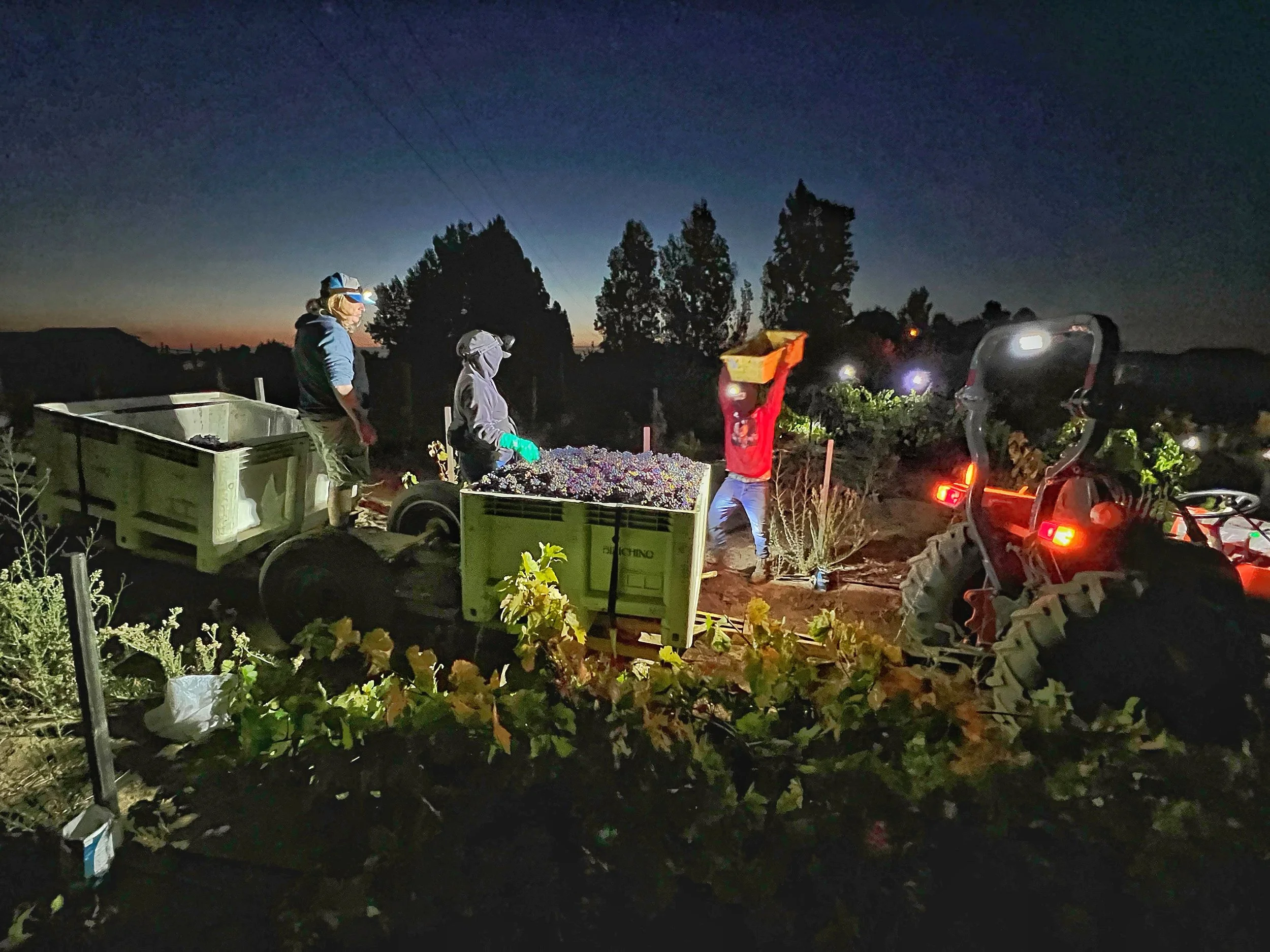
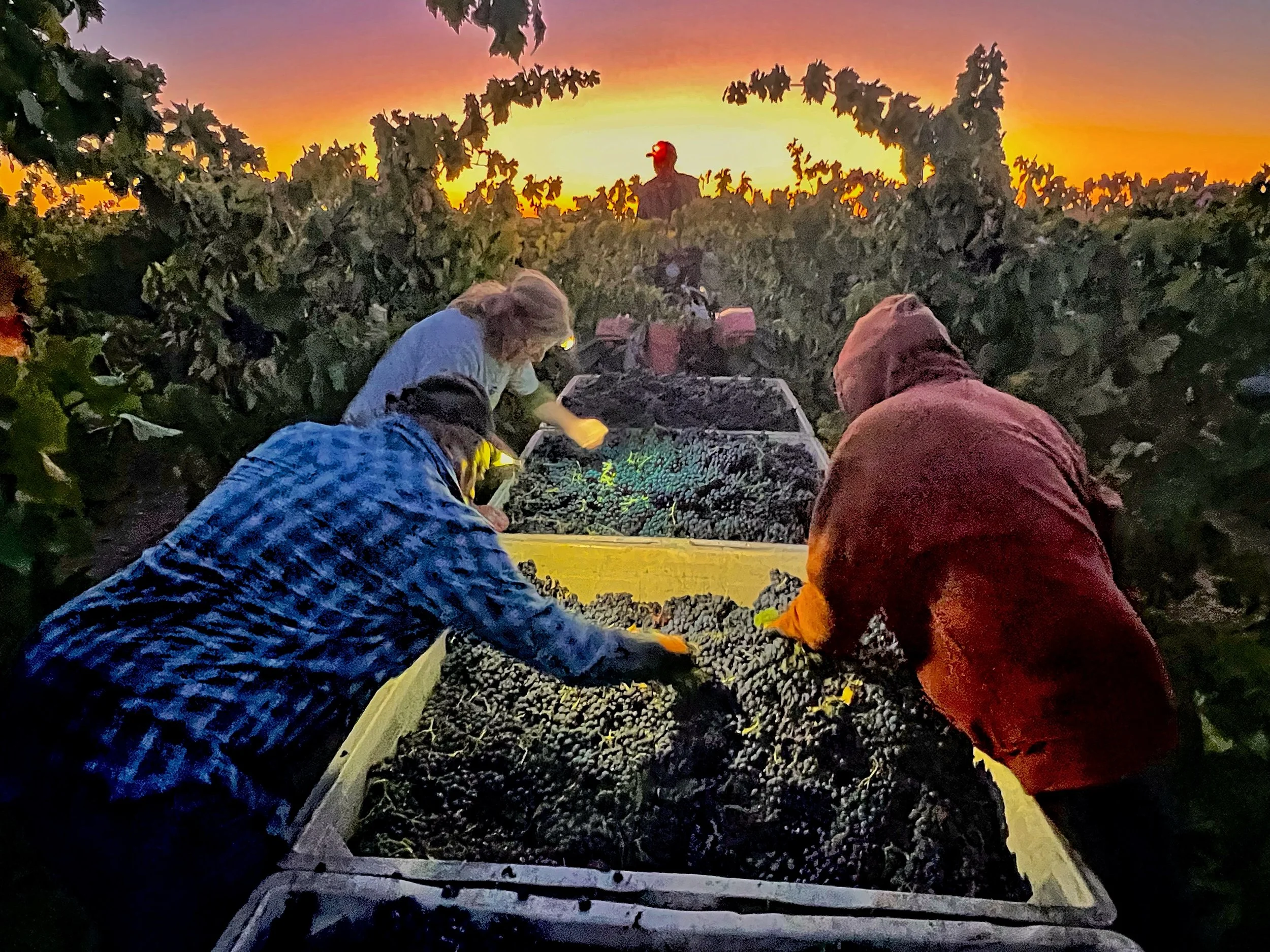
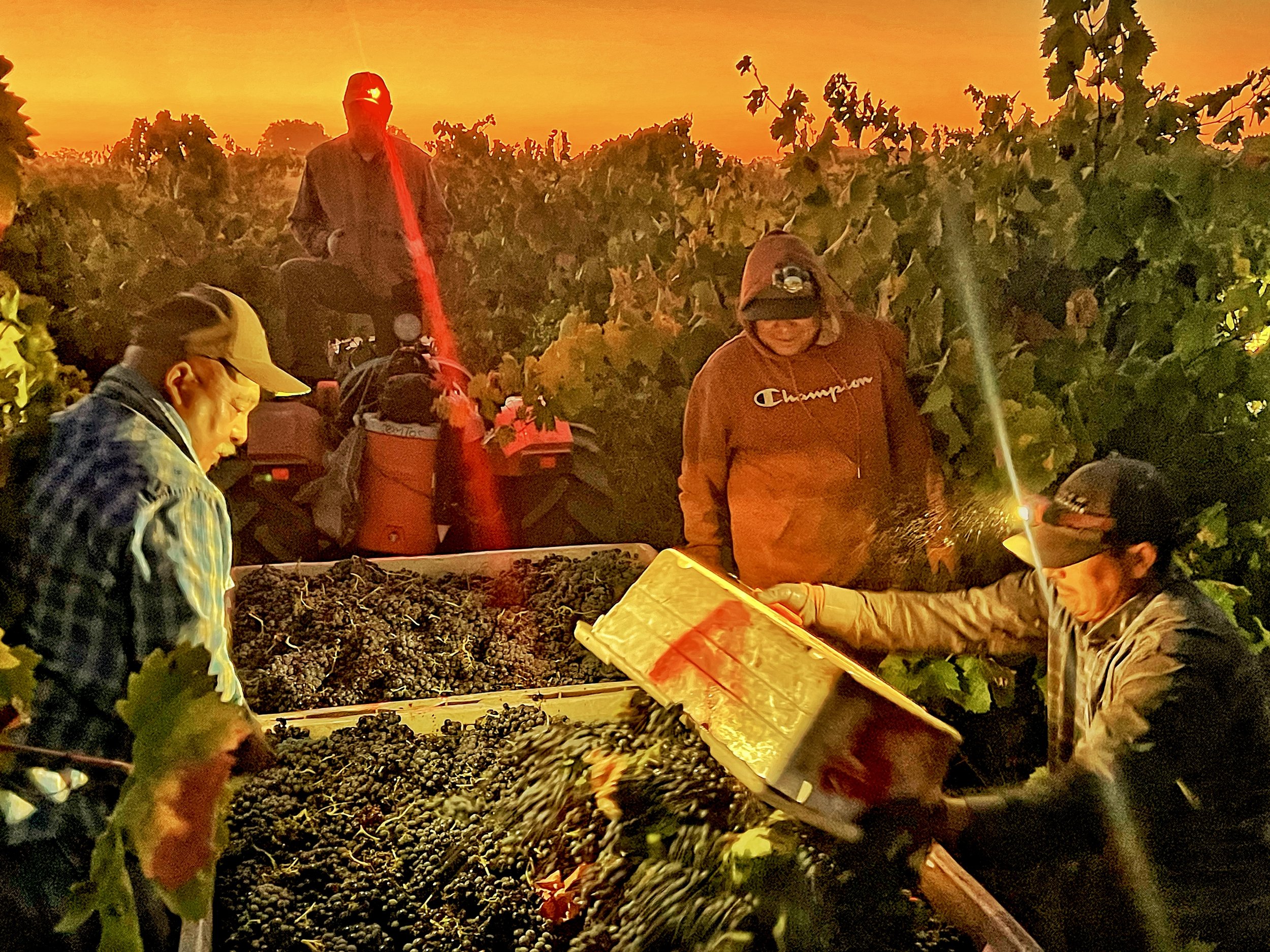
Nighttime pick of Mourvedre at Little Big Block planted in 1895 with two tractors and a team of pickers hoisting their picking bins high in the air lit up by the tractor’s lights and those of the pickers own headlamps.
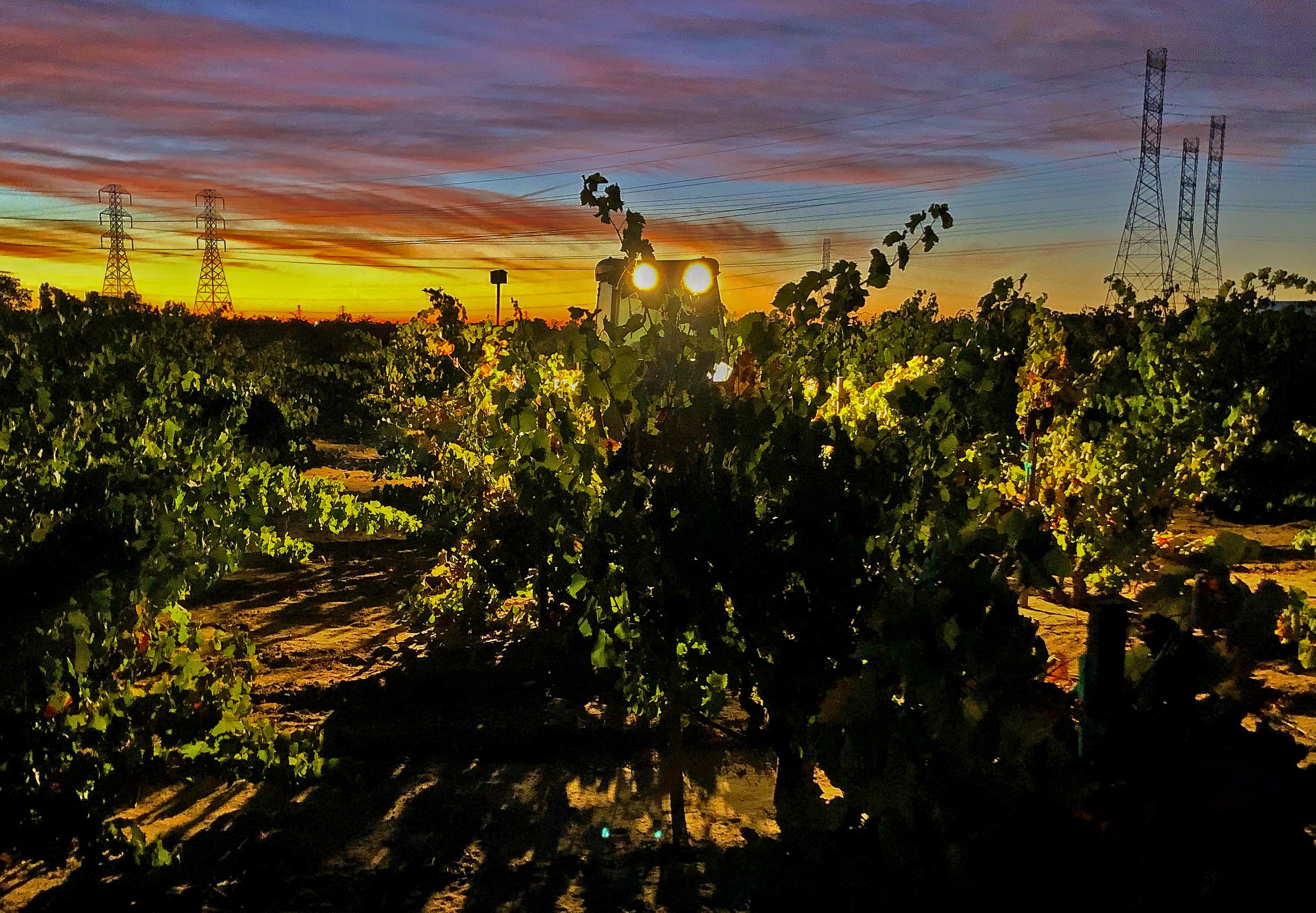
Colorful pink and purple and blue sunrise with power lines visible and the headlights of a tractor backlighting an especially bushy Carignane vine at Little Big Block Vineyard, planted in 1895.
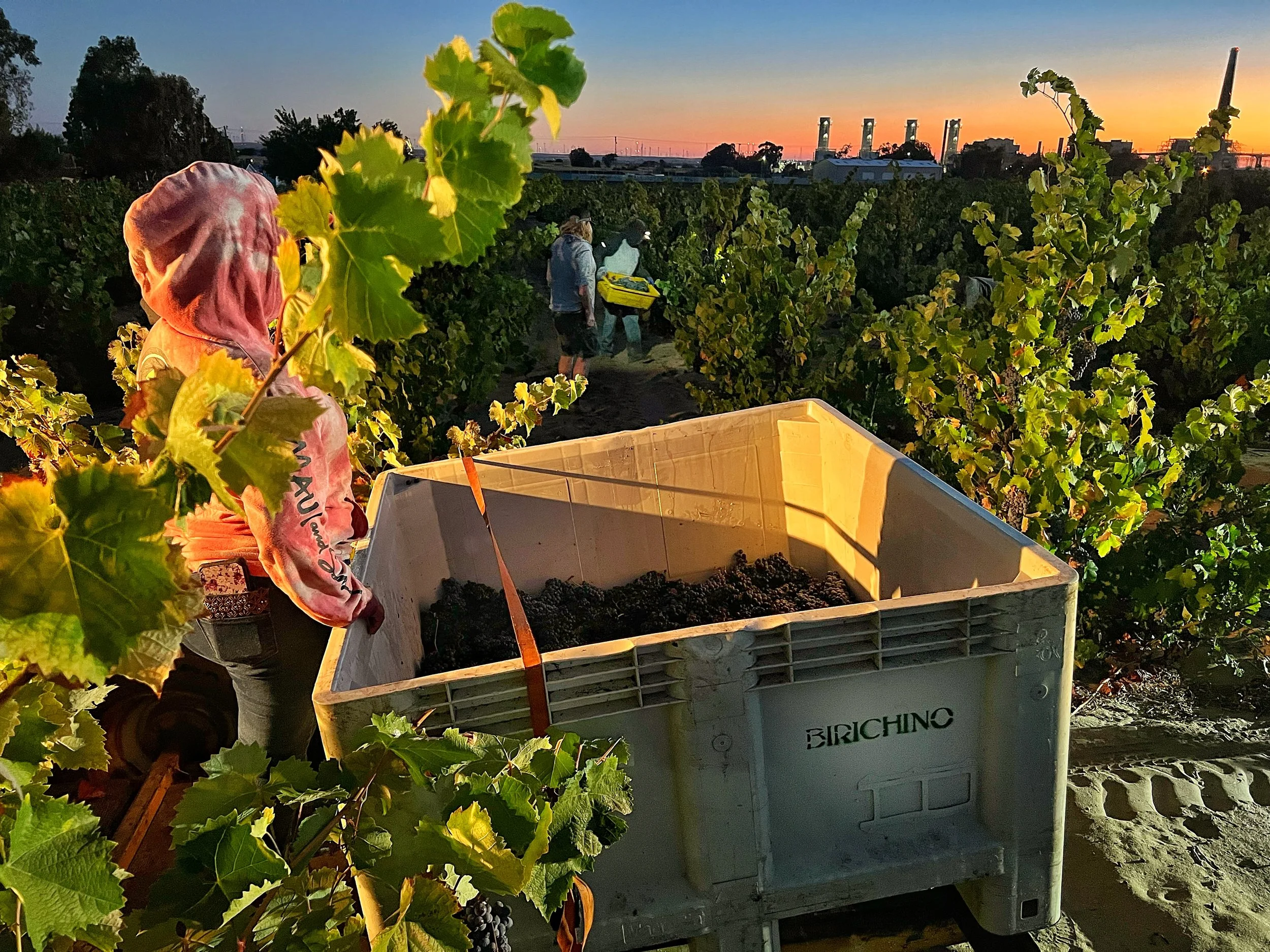
A partly filled grape bin with Mourvèdre grapes with the designated leaf-puller in a bright pink hooded sweatshirt at left, with the power lines and pinks of sunrise visible at the horizon at this old vineyard in Contra Costa County planted in 1895.
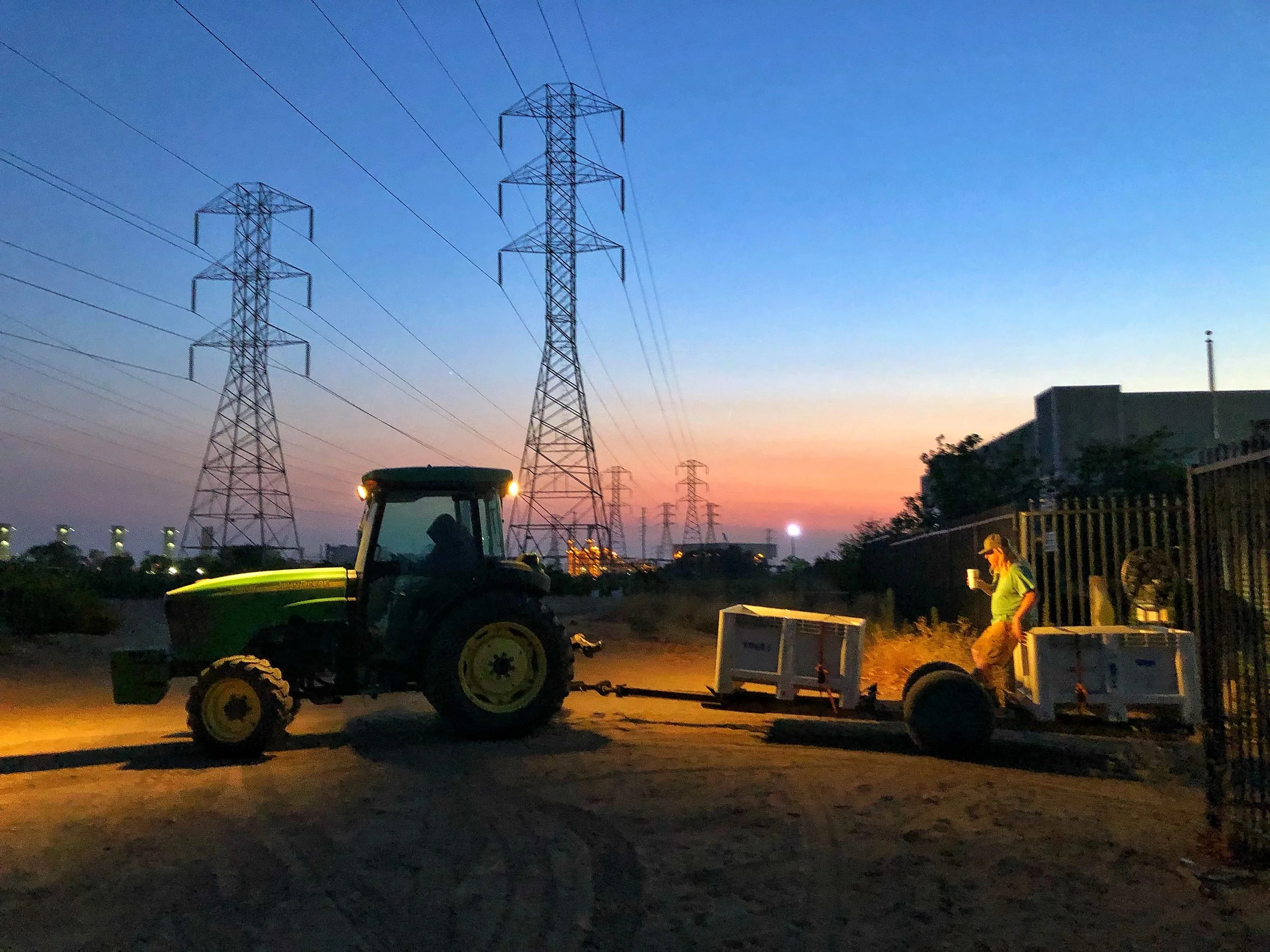
Sunrise scene of a tractor pulling 2 empty grape bins underneath tall Power lines and John carrying a cup of coffee- an essential item for nighttime harvest work!
Up on a shale-strewn bench on the Western edge of the Salinas Valley in Monterey County, with the Santa Lucia coastal range providing a rain shadow and shelter from the intense late-afternoon sun just to the West, the ancient Italian grape varieties of Malvasia Bianca and Muscat Canelli have found a fitting home in the New World.
The vineyard is home to a great number of grapes - red and white - but we have found that this particular part of Monterey County is highly suited to aromatic varieties.
This specific selection of Malvasia - brought to America in the early 20th century from Calabria in Italy's far south - seems to relish the warm days and cool nights here. Planted in the same time period in an adjacent vineyard block, Muscat Canelli here reaches its full potential of expression while retaining the natural acidity, freshness we vibrancy and perfume we so esteem.
A pair of photographs of the vineyard from the same vantage point in late morning sunlight, and then again at the approach of dusk provide a visual illustration of the marine influence on the vineyard.
This large diurnal temperature variation [the difference between daytime highs and nighttime lows] is due to the dramatic effect of the natural corridor formed by the Santa Lucias to the West and the Gabilans to the East, drawing a mass of cool air and fog southward from above the cold, 3,600m deep waters of Monterey Bay.
Just offshore lies a deep underwater canyon as large as the Grand Canyon in Arizona. As no major river presently lies at the head of it, it is theorized that the canyon came into existence millions of years ago as an ancient outlet of the Colorado River before it found its way to the Gulf of California.
Daytime clear, sunny image of Malvasia grapevines receding into the far distance, with the Santa Lucia Mountains silhoutte at the horizion line.
The same Malvasia Bianca vinerows receding into the distance in late afternoon or early morning, with thick fog shrouding the vines and freoshortening the visibility, obscuring entirely the mountains in the distance visible at midday.
A red-headed John in a blue shirt deep in rows of vines sampling Malvasia Bianca with a golden grass hued, Live-Oak studded hillside visible in the distance.
The Montague Vineyard just to the West of the Mokelumne River in Lodi was planted circa 1927-1930. It has been farmed by generations of the Shinn family who first settled in the area in the 1850s. A short walk from Bechthold, it is planted in the same Tokay Fine Sandy Loam soils, and despite its advanced age , it consistently produces a healthy crop of quite robust bunches and generously-sized berries that lend themselves to inclusion in a broad array of wines. An early pick becomes part of our Vin Gris and Rosé Pet Nat, and later picks adapt themselves to carbonic maceration as well as traditional native ferments. Unlike the reputation of Old World Carignane, oft disdained as a rough and rustic variety best ripped up, Montague charms us with its easygoing Californian nature.
Sunrise image of three pickers bent over three full half-ton bins of Carignane at Montage Vineyard in Lodi planted in the late 1920s, with the tractor driver wearing a red cap visible at top, backlit by the brilliant pinks and oranges of sunrise.
Pickers at Montague Vineyard at sunrise dumping their picking boxes into half ton bins with leaf-pullers inspecting the fruit as it falls, and the tractor driver’s red LED headlamp looking like a laser beam cutting diagonally across the image.
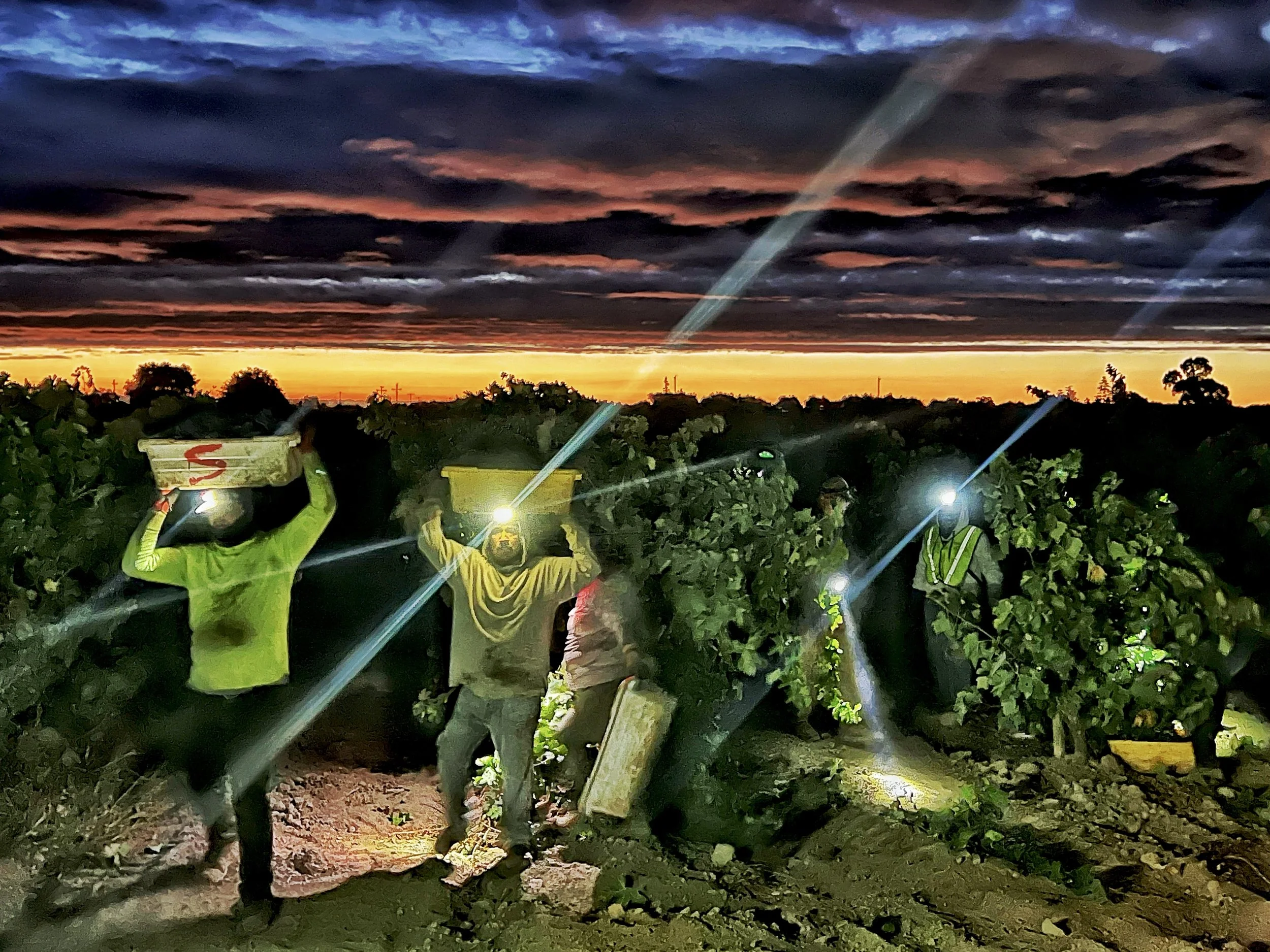
Four pickers at Montague at Sunrise, with two pickers prominently figured at left in iridescent yellow and green shirts with their grape bins full and perched atop their heads, and with their LED headlamps creating lens flare and sending bright white lines across deep blue, pink, and purple clouds overhead.
In 2017, we began working with head-pruned, dry-farmed cabernet sauvignon from the historic Peter Martin Ray Vineyard, some 600m high up in the Santa Cruz Mountains in Saratoga on very low vigor, Franciscan shale soils. Peter’s late father Martin learned the ropes of the wine business at the neighboring property of that famous Burgundian, Paul Masson. Mount Eden is a stunning site, first developed by Martin Ray back in 1943, one hillside over from Montebello, and now divided between Peter Martin Ray and Jeffrey Patterson of Mt. Eden. We are very, very excited about the quality of the fruit from this brilliant mountain vineyard, and at the opportunity to work with, and learn from Peter and his family.
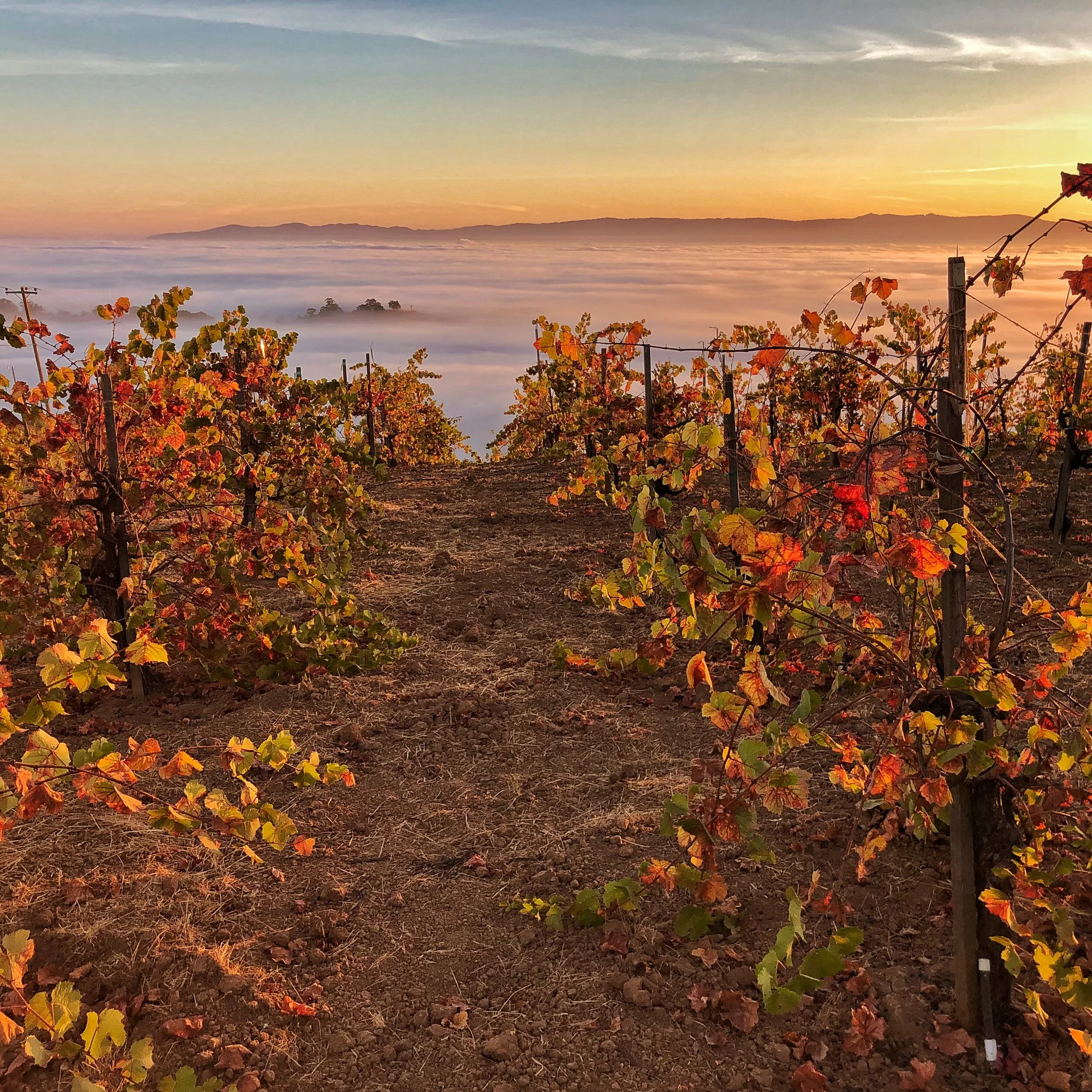
Sunrise East view of late fall red and orange-hued leaves on Pinot Noir vines at Peter Martin Ray Vineyard high up on Mt Eden, overlooking what looks like islands in fog, but is actually the view of a few hilltops peeking up above the fog over the Santa Clara Valley and San Francisco Bay.
Planted by Dick Graff on a northwest-facing slope on limestone and decomposed granite soils, the vineyard lies within sight of the Pinnacalitos, near the East entrance to Pinnacles National Park. At some 1800' elevation, we often pick this venerable vineyard starting at 2am under the stars of the Milky Way and the Perseid Meteor showers, to a soundtrack of coyotes on the prowl. Farmed for many years by another Chalone legend, Bill Brosseau (and previously known as the Antle Vineyard), the vineyard was purchased a few years ago, and now is farmed by Kurt Gollnick and Janet Rogers.
Nighttime long exposure of Pinot Noir at Rodnick farm at Chalone, with neat rows of grapevines receding into the distance and a silhouette of mountains visible under a very starry night sky.
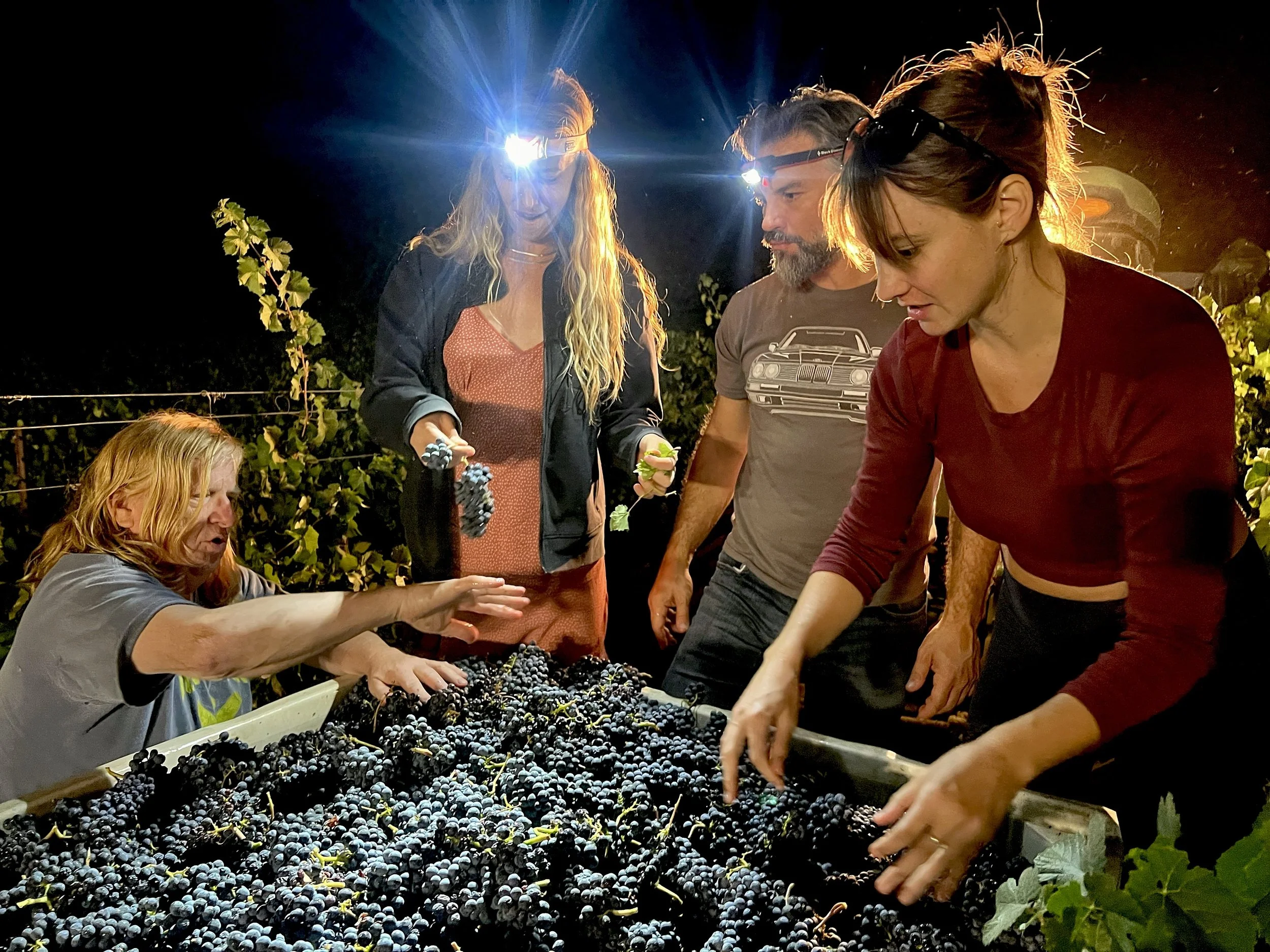
Nighttime pick of Pinot Noir at Rodnick Farm, with John providing guidance to three of the Birichino crew as they hand-sort fruit being loaded into a half-ton bin by the light of their headlamps and the tractor’s light bar.
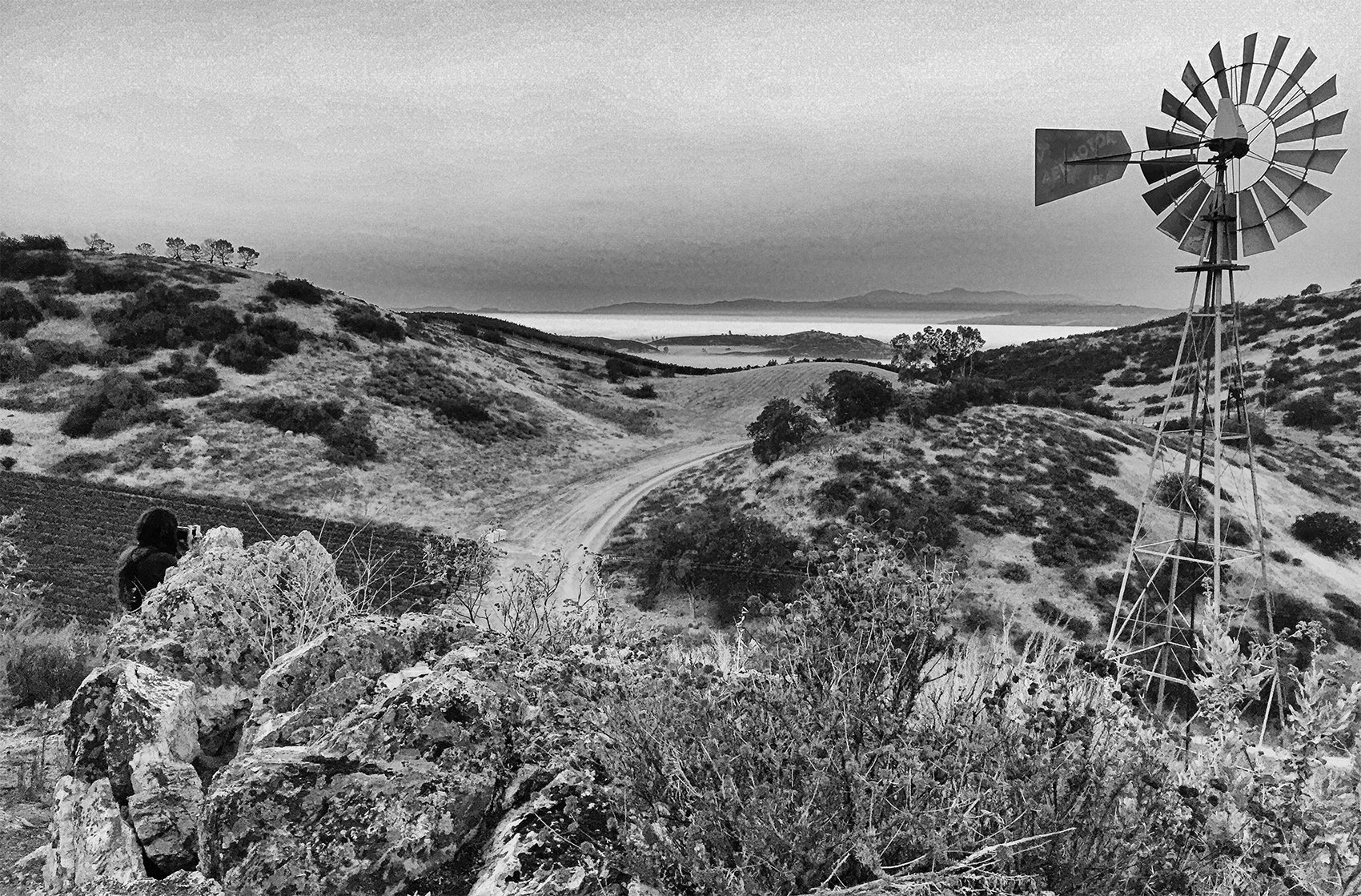
Black and white image of Rodnick Farm with windmill at right, overlooking a curving dirt road and Pinot Noir off to the left, and in the far distance, the fog-shrouded Salinas Valley and in the even-further distance, the Santa Lucia Mountains forming the Western edge of the Salinas Valley.
Pat Wirz's father planted these own-rooted, dry-farmed, head-trained Riesling vines in 1964. The mineral magic of the Cienega Valley derives from a rare combination of granitic and calcareous layers- nutrient-poor, though deep and friable, allowing these low-yielding, organically farmed vines to penetrate deeply in search of sustenance. A very long growing season, and significant humidity, courtesy of a small creek which bisects the property, aid in the reliable development of botrytis, the final element in an alchemical transformation from sky and earth to dry, rocky, liquid gold.
A wide angle view in Spring of a rusty yellow crawler tractor in the foreground, with green grasses and yellow mustard-dotted Riesling bush vines planted in 1964 on their own roots at Wirz in the Cienega Valley in the middle distance, and rolling gentle green grassy hillside dotted with Live Oaks and blue sky and clouds visible at the horizon.
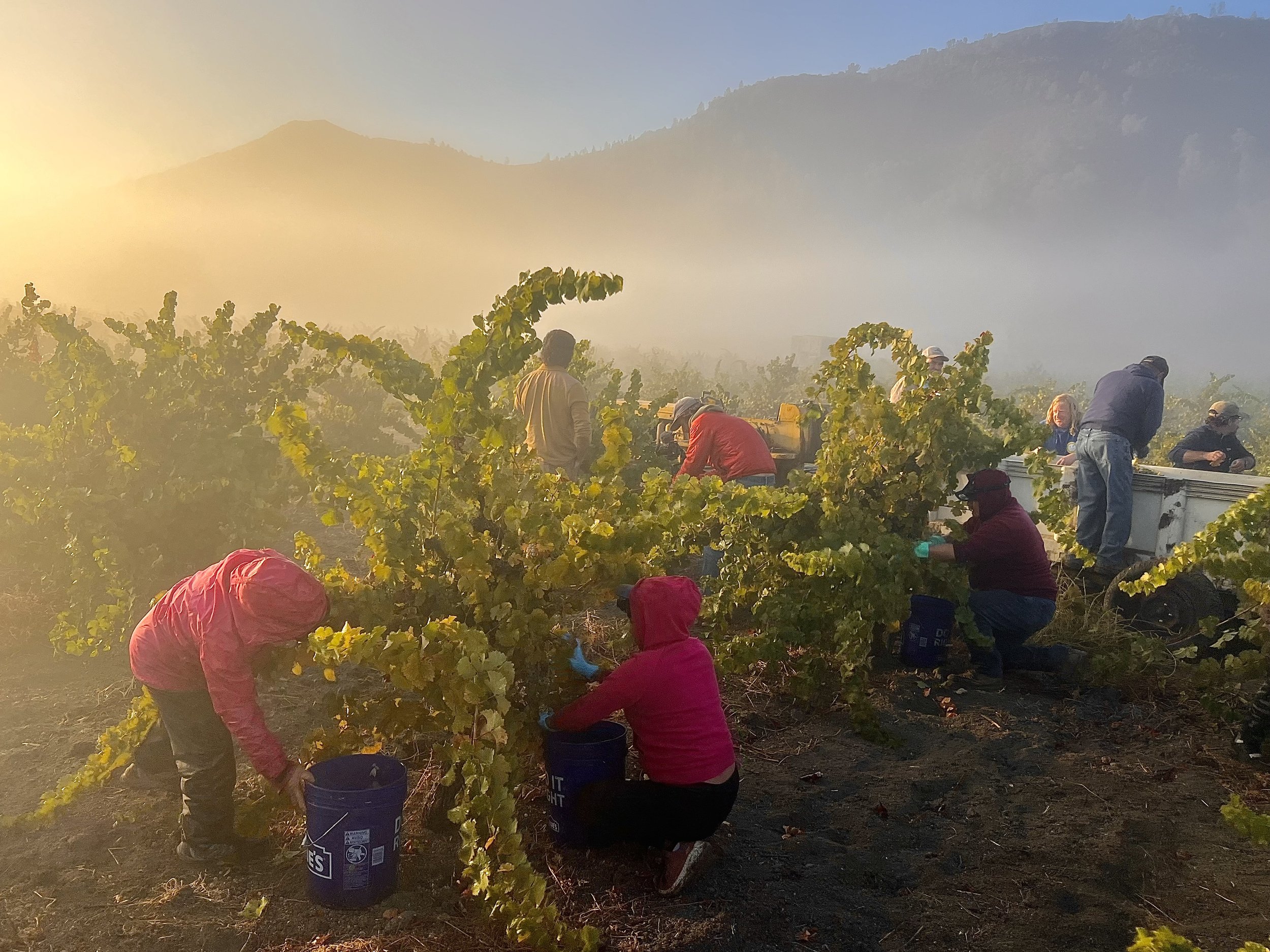
Pink and maroon hoody sweatshirt-wearing pickers bending down to pick fog-shrouded Riesling at Wirz, with the outline of the Gablian Mountains only just starting to become visible as morning fog burns off.
We may be swimming against the current, but we are proud to continue the 19th century tradition of making wine from Sémillon grown in the Napa Valley. The Pelissa/Hoxsey family have been farmers here since 1903, and planted these head-trained, dry-farmed, organically farmed Sémillon vines at Yount Mill Vineyard in 1962.
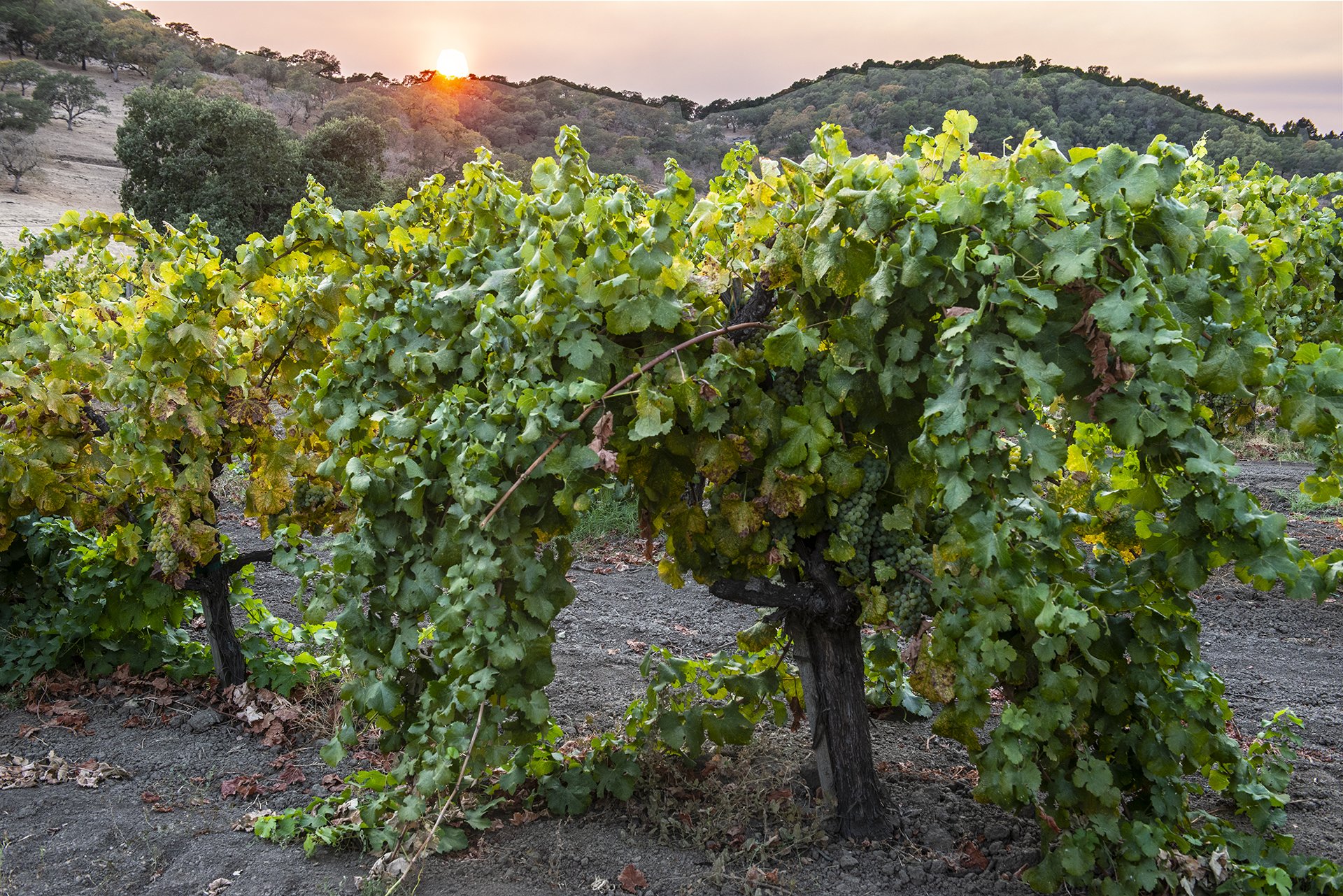
Sunrise 2020 scene of our first harvest of bush vine Semillon with a wide, almost tree-like Semillon vine in the foreground, and rolling, Live Oak-studded golden hills in the background, and with an overall eerie orange glow to the entire scene due to the fires that had just started burning in Napa that year.